Your home computer zips through tasks, doesn’t it? Stream a movie, edit photos, or even juggle 20 browser tabs at once—it seems like it can handle anything. Yet, in the grand tapestry of the universe’s most enigmatic puzzles, such a computer would be as futile as a flashlight in the blazing sun. Even the mightiest supercomputer of our age would buckle under the weight, potentially needing 10,000 secluded years to untangle the riddles that a quantum computer solves in but a heartbeat. It’s time to peel back the layers of this technological leviathan, often housed in a machine as dazzling as it is curious: the golden chandelier, also known as the Quantum Computer.
Based on content from Bobo’s 100,000 Whys
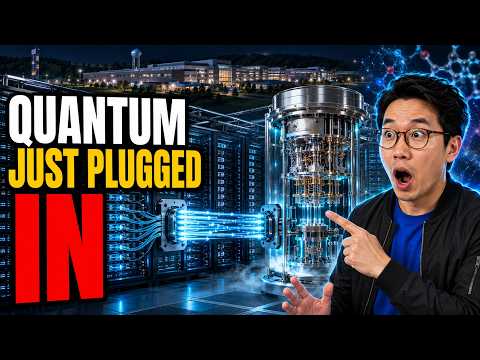
This isn’t merely poetic flourish. The “golden chandelier” moniker is an averagely adroit descriptor of the large, astonishingly delicate dilution refrigerator which houses quantum computers. The sight of it is reminiscent of a grand luminaire one might find in a regal ballroom, and yet, its purpose is far removed from illuminating darkness. Its brilliance lies in the cold—the coldest that our known universe can muster. The bottom chamber operates close to absolute zero (-273.15°C), a realm of silence where quantum magic is lured out of the cacophony of thermal agitation.
Traditional computing, the sort you use daily, is straightforward in its binary language. Imagine a coin resting heads or tails on a table, representing either a 1 or a 0. The limitations here are vivid: Only one path at a time, one problem-solving journey that halts, retraces, and sets forth anew with each wrong turn. Contrast that with a “quantum coin” in superposition—a perpetually spinning entity that defies observation: neither heads nor tails, or perhaps both simultaneously. This is the crux of quantum individuality: superposition.
The true wonder, however, is in the quantum computer’s ability to engage in parallel computing. Imagine the fantastic trick of conjuring infinite versions of yourself, each walking down separate hallways of a maze concurrently. While classical computers exhaustively attempt one route after another, quantum computers forge through every potential dead-end of a computational labyrinth in parallel, collapsing towards the solution with unprecedented speed.
Despite the dazzling prospects quantum computing offers, not all lend themselves to unquestioned optimism. The natural evolution of computing comes with staunch critics concerned with ethical, practical, and security implications, particularly regarding cryptography and personal data security. There’s an ongoing discourse around the potential of quantum computers to unravel encryption that secures today’s digital world. Each step forward in technology seems to tiptoe on the edge of moral terrains, marking new boundaries for ethical contemplation.
While traditional computers currently outshine quantum ones in practical, everyday applications due to the latter’s nascent stage and operational delicacies, the quantum realm holds answers to questions not yet fully conceived. The world’s escalating challenges—climate change, advanced healthcare solutions, unraveling the mysteries of life itself—stand like towering riddles, awaiting a suitable adversary.
Here we stand, at the cusp of greatness and uncertainty. For every problem that felt insurmountable, quantum computing holds the promise, or so some might hope, to simplify, to clarify. But it is not mere fairy dust; it is the fruit of human curiosity and the relentless pursuit of overcoming boundaries—just as we have always done.
What would you unravel if handed the reins of a quantum computer for just a moment? You too can share your thoughts, and perhaps in asking we begin receiving answers. There is, after all, a unique pleasure in untying the knots that appear impossible, one strand of curiosity at a time.
—