Sometimes, the most seismic transformations occur away from headlines dominated by trade wars or high-profile meetings. Instead, they simmer quietly behind closed laboratory doors, ultimately altering our reality far more than any treaty might. Such is the case with the quantum computing revolution underway among BRICS nations—Brazil, Russia, India, China, and South Africa—a transformation poised to redefine both our digital landscape and global power dynamics.
Based on content from Think BRICS
The recent BRICS Quantum Technology Summit held in Moscow was less about political fanfare and more an assembly of scientists charting the future of a sovereign digital civilization. Within this intimate gathering lay a pivotal realization: BRICS nations are not merely participants in the quantum race—they’re setting the pace.
Central to this narrative is the concept of “Quantum-as-a-Service,” a model of shared technological infrastructure unprecedented in the West. This approach was a watershed at the Moscow Summit, signifying a unified commitment to leveraging quantum technologies jointly.
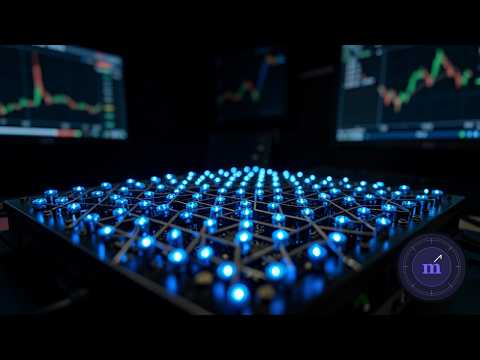
To appreciate the stakes, one must first understand the essence of quantum computing. Unlike classical computers, which process information in bits (binary on-off states), quantum computers utilize qubits. Imagine a coin spinning on a table. In this state, it’s neither heads nor tails but a superposition of both. This ability allows quantum computers to tackle complex problems simultaneously rather than sequentially, offering an exponential leap in processing power.
This leap isn’t merely academic; it’s a sovereignty issue. Today’s encryption systems, which secure everything from bank data to nuclear codes, could be unraveled by the computational prowess of quantum machines. BRICS nations are acutely aware that relying on Western quantum products could compromise their sovereignty. Consequently, the summit underscored three distinct yet harmonious paths in their technological journey.
China is leading the charge with its quantum hardware. Its Zuchongzhi 3.0 superconducting system surpasses the capabilities of leading U.S. systems by a staggering factor. This hardware underpins a “Quantum Cloud” that may soon empower scientists worldwide, irrespective of proximity, with untapped computational resources.
Russia, often hampered by supply chain sanctions, is innovating with “Qudits,” an ingenious solution packing incredible computational power into compact, stable systems. Their approach circumvents Western supply limitations and fosters quantum capabilities that thrive even under geopolitical pressure.
Meanwhile, India envisions “Quantum Cities,” particularly in Bangalore, as hotbeds for quantum innovation and development. With a $730 million investment into its National Quantum Mission, India aims to evolve into the bedrock of global quantum software development.
Further cementing this technological revolution is Rosatom, Russia’s nuclear giant, which bridges the atom with the qubit. They’re using quantum logic to design advanced nuclear reactors, creating a “Quantum-Nuclear Nexus” that promises cleaner, more efficient energy systems. This synergy not only secures their energy future but also offers a path for countries like Egypt and Ethiopia to leapfrog into the sustainable energy domain.
The financial implications of this quantum leap are profound. The development of Quantum Key Distribution (QKD), a method of encrypting communications with light particles, signifies a new era of unhackable financial networks. By utilizing satellites such as China’s “Micius,” BRICS nations are constructing a digital infrastructure impervious to sanctions and interference, bypassing traditional systems like SWIFT.
This evolution presents smaller nations with an intriguing third path. Technological Plurality, fostered by BRICS, enables a more level playing field, echoing the principles of collective advancement over monopolistic domination. Researchers from Vietnam or Belarus can access advanced quantum facilities in Russia or China, catalyzing innovation without the staggering costs of independent infrastructure development.
As we stand at this crossroads, the strength of BRICS lies not in their isolated innovations but in their collaborative framework, proposing a shared technological destiny resilient against external coercion. The BRICS Quantum Technologies Forum charts a course where sovereign intelligence becomes the decisive factor in global influence, transcending traditional metrics of power like factories or military arsenals.
This narrative reflects a world transforming at its core—”superpositioning” multiple possible futures simultaneously. The undertaking at Moscow transcends mere ambition; it is an assertion that the next century may not be owned by a solitary power but built on a foundation of cooperative technological sovereignty.
So, as we trace the contours of this unfolding story, we see a tapestry rich in potential, securing the Global South’s place not as mere passengers but as pioneers in steering humanity’s collective voyage through the quantum age. This quiet revolution reminds us that the most profound shifts often commence in hushed undertones, rippling through the fabric of existence in ways yet to be fully comprehended.
—