In the sudden glare of the COVID-19 pandemic, vaccine development transformed from a specialized scientific endeavor into a global focal point. Never before had billions of individuals collectively concerned themselves with the nuances of vaccine trials, the intricacies of mRNA technology, and the timing of emergency use authorizations. The rapid development of COVID-19 vaccines is itself a testament to the marvels of modern science—a feat achieved through a synergy of decades-long research, coordinated global funding, and a sprinkling of favorable attributes in the coronavirus. Despite this achievement, it highlighted an unsettling truth—the vulnerabilities and delays inherent in our traditional vaccine development processes carry costs measured in both currency and lives.
Based on content from The Honeyed Truth
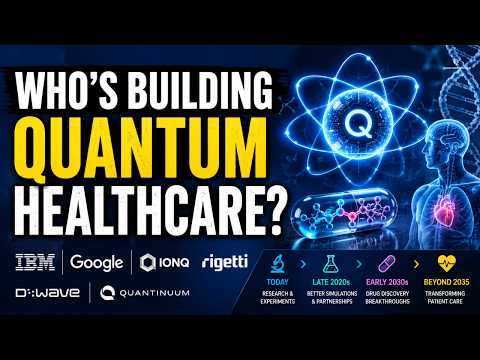
As we explore technologies ripe with potential to expedite this process, quantum computing stands on the precipice of transforming vaccine development. This potential emanates from its capability to simulate molecular interactions—those enigmatic interactions that defy the analytical capacity of classical computers.
To appreciate the impact quantum computing could have, we must first distill the essence of vaccine development. Designing a vaccine is more than the sum of its logistical hurdles; it is an intimate dance with chemistry, a narrative of molecules striving to teach the immune system about shadowy threats without ever unleashing harm themselves. In this dance, the choreography lies in understanding which parts of the pathogen the immune system should memorize, and how variations in these components can lead to an effective immune defense.
The COVID-19 vaccines, especially those based on mRNA platforms, operate by instructing human cells to produce a fragment of the virus—the infamous spike protein. This protein becomes the immune system’s learning tool, a mock exam for a real-viral encounter. The success of this strategy leaned heavily on deciphering the spike protein’s architecture—a feat reliant on structural biology techniques and advanced computational models.
Enter quantum computing. Its promise lies in unraveling the quantum mechanical complexities of molecular interactions. For vaccine development, this could mean significant advancements in antigen design, a process where the immune system’s trainers, the antigens, are meticulously crafted to ensure broad protection, stability, and cost-effective mass production. The sophistication of this task mirrors an elaborate puzzle, one that grows in complexity with each additional objective required.
Yet, the present constraints of classical computational models, including advances powered by AI like DeepMind’s AlphaFold, continue to throttle the potential of true simulation accuracy. The detailed dance of electrons within antigens during immune interaction, or the binding affinity between proteins—a domain where quantum computing could excel—remains an ambitious, distant goal.
Besides antigen design, quantum computing could extend its influence to predict viral evolution—a task that transcends theoretical import, touching lives by staving off the adaptation of pathogens into vaccine-resistant variants. This endeavor is more than anticipation; it’s a frontline reinforcement, preempting viral strategies with foresight derived from understanding the energetics of mutation-driven protein transformations.
At the intra-human level, exploring immune response at the atomic scale presents a fertile ground for quantum simulation. Beyond the initial strike against a pathogen, it’s the cascade of molecular reactions and signal exchanges within the immune system that orchestrate our biological defense mechanisms. Grasping these interactions with quantum-aided clarity could spell the difference in tackling notoriously evasive adversaries like HIV or the ever-evolving influenza.
To strike a balance in this idealistic vision, we must address the reality—today’s quantum computers lack the processing power to simulate these dense biological systems with the necessary precision. The gulf between quantum promise and present-day reality remains sizable, encapsulated by burgeoning hardware needs requiring extensive evolvement.
Even as we anticipate quantum advancements, classical computational methods are hardly static. They have ushered notable gains in vaccine research, guiding our understanding of complex molecular formations and expediting the journey from scientific theory to clinical application. Quantum computing, to justify its anticipated role, must outpace these existing and evolving technologies—not merely shadow them.
Reflecting on the COVID-19 era, the world bears witness to both the repercussions of delayed vaccine development and the boundless potential when scientific ambition intersects with urgency. Quantum computing envisions a future where molecular intricacies of immunity are not merely understood but wielded with surgical precision—a future where viral foes, be they known like influenza or speculative like the next pandemic, find themselves outmaneuvered by a technologically empowered human response.
This anticipation rests on solid scientific foundations, built upon the uniquely quantum nature of the problems at hand. Yet, it commands the maturation of quantum hardware—an evolution already underway, albeit predictably uncertain in its timeline. As this transformation unfolds, it whispers a promise—a sharper, swifter response to the infections that challenge us, both old and new.
—