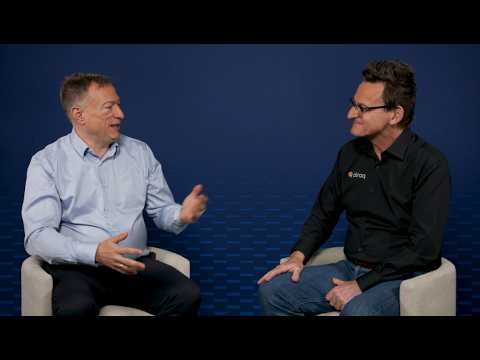
The peculiar world of quantum computing represents a burgeoning frontier. Yet, amidst its promise, challenges abound. As Frank Indiviglio from IQM delicately outlined in a recent presentation, the integration of noisy intermediate-scale quantum (NISQ) devices with high-performance computing (HPC) systems is both a pivotal technical and conceptual juncture.
Based on content from Open Compute Project
IQM, a company at the forefront of quantum computing advancements, presents a unique full stack approach—from quantum processing units to encompassing software and cloud services. Indiviglio’s insights illuminate how hybrid quantum-classical workflows could offer new pathways for scientific discovery, particularly in fields that simmer with the potential of exponential breakthroughs, such as chemistry and artificial intelligence.
The very heart of this integration lies in addressing key architectural requirements—crafting an efficient synthesis of low-latency feedback, a scalable orchestration, and the vital co-design of quantum software stacks harmonized with classical optimizers. As Indiviglio notes, it’s more than just merging quantum systems with HPCs; it’s about re-envisioning how these systems communicate and operate to render previously unattainable possibilities within reach.
IQM’s approach treats quantum systems not merely as standalone entities but as enhancers capable of enriching the HPC system’s capabilities. Their cloud platform further extends this integration, allowing diverse users—be it academic institutions or industries—to innovate and experiment with varied quantum architectures.
This nuanced integration isn’t without its critics. Some might argue the limitations of NISQ devices hinder practical applications. Yet, as Indiviglio emphasizes, while individual quantum algorithms, like Shor’s or Grover’s, may seem simplistic alone, they fit into more expansive computational frameworks. The roadmap to a robust quantum-classical interface requires patience as these technologies slowly tighten their bonds, transforming abstract potentials into operational realities.
Furthermore, IQM’s progress toward error correction reflects a crucial stride in this journey. Their Halocene line facilitates the development of algorithms towards fault-tolerant quantum computing, signaling a future where quantum systems function with durability akin to classical systems.
Real-world implementations are already underway. Initiatives at centers like LRZ in Munich exemplify how IQM’s systems have reliably been in operation for years, catalyzing the development of the Munich Quantum Software Group, which advances open platforms for device management and system integration.
The conversation around this integration inherently invites introspection about the future of computation. Indiviglio’s presentation leaves attendees pondering a world where quantum and classical systems not as distant relatives, but as partners with distinct roles yet shared objectives. Each enhances the other, offering clues to unfold layered complexities and unlock new knowledge.
As we stand at the brink of this computational unison, it serves as both an opportunity to reflect on our current technological paradigms and a clarion call towards continued interdisciplinary collaboration. The potential to bridge these computing worlds invites a broader dialogue on how these advancements could reshape not only scientific discovery but the very landscapes of industry and education.
In closing, the narrative of quantum-classical integration reminds us that true innovation thrives at the intersection of diverse fields and minds. It challenges us to reimagine what’s possible, urging us to explore, adapt, and evolve in the pursuit of expanded horizons.
—