In the quiet corridors of emerging technology, lies a potent narrative waiting to reshape the very core of healthcare. Quantum medicine—a concept that feels akin to the realm of science fiction—carries the promise of revolutionary advancements, yet the roadmap from concept to clinical reality is peppered with challenges and tempered expectations.
Based on content from Quantum SystemHub
Imagine a world where complex molecular simulations, once bottlenecked by the limitations of classical computing, become navigable. It’s in this quantum realm that possibilities like personalized medicine and accelerated drug discovery take root. But who is weaving the threads of this tapestry, and what is the fabric they are constructing?
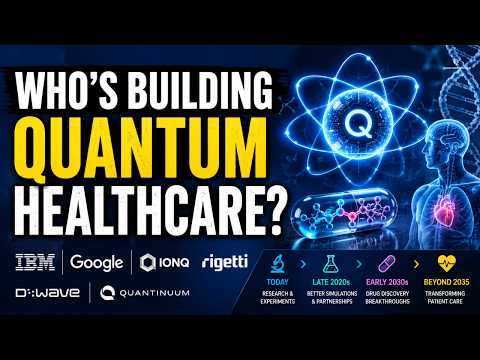
Behind the headlines of sweeping breakthroughs, it’s the tangible, methodical work happening in some of the leading tech corridors—companies including IBM, IonQ, and startup innovators like Quantinuum—that’s defining the foundation of quantum healthcare. These entities aren’t simply peering into the horizon; they’re arduously building colossal quantum systems with the capacity to process quantum bits or qubits, enabling them to solve the unsolvable—a vital pivot from the binary limitations of classical computing.
We need to pause for a moment to consider the profound insight a quote offers: modeling molecular interactions precisely grows exponentially with electron orbital increases. This isn’t merely technical jargon; it’s a crucial distinction dictating why diseases that elude current methodologies may well be approachable through quantum simulations. The computational door might finally open, revealing treatments that were previously obscured.
Companies like Roche, Merck, and Boehringer Ingelheim are not just observing from the sidelines. They are actively engaging with hybrid workflows—melding the strengths of classical and quantum computing—to navigate genomic structures, simulate protein folding, and accelerate clinical data analysis. This engagement is not hypothetical; the collaborations yield proof, such as Moderna’s successful predictions using quantum tech, illustrating both progress and potential in this field.
But this is no solitary endeavor of private enterprise. Across the globe, nations are investing mightily in quantum healthcare’s promise. Denmark has announced an Apollo-esque quantum computing mission, reflecting the scale of ambition akin to reaching the moon. Similarly, other nations like the UK, Canada, and Japan are racing not so much against each other, but toward a shared future where quantum computing could redefine their healthcare landscapes.
Despite these prolific strides, the seasoning of healthy skepticism is appropriate. The transformation of quantum medicine into regular clinical application requires overcoming formidable barriers—technical scalability, economic costs, talent scarcity, and integration into entrenched systems. These elements contribute to a nuanced timeline where gradual advancements, rather than sudden breakthroughs, pave the path to 2035 and beyond.
The most sobering question remains: when quantum medicine does anchor itself in clinics worldwide, which pioneering effort will history remember as the catalyst? Will it be a monumental technological breakthrough amidst IBM’s hardware advancements, the chemical accelerations under IonQ, or perhaps the fervor of a national endeavor like Denmark’s sustained commitment?
Each step detailed here reveals a layered symphony of technological advancement, corporate strategy, and international cooperation. So as curious seekers in this field, let’s ponder the questions left unsaid and the potential for quantum medicine not just to make waves, but to forge an ocean of opportunities. After all, the canvas that is the future of healthcare is being quietly painted today.
—