The pulsating heart of innovation beats audibly at VivaTech 2026 in Paris, where the symphonic interplay of artificial intelligence, robotics, and quantum computing is not merely a glimpse into a distant future but a celebration of the tangible present. As one of Europe’s largest gatherings of technological prowess, this year’s event draws not only visionaries and technocrats but also a world eager to see the harmonies these singular innovations can create.
Based on content from Associated Press
In the sprawling main exhibition hall, beneath the kaleidoscope of LED lights and vibrant digital displays, recognizable industry titans like Samsung and L’Oreal carve space alongside nimble newcomers. Yet, it is artificial intelligence that commands the spotlight once again, though with a twist from previous congregations. Here, companies are not indulging in speculation over AI’s potential capabilities; instead, they’re demonstrating tools, products, and systems that wield AI with finesse in the present moment.
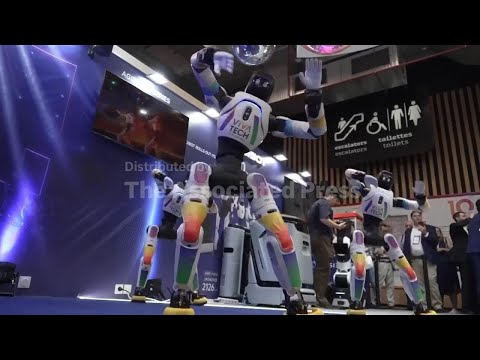
Humanoid robots glide across stages, their motions eerily fluid, mimicking the grace of human biology. AI-powered software orchestrates demonstrations showcasing cloud intelligence and seamless connectivity through consumer devices. At the core of these displays, however, stands IBM’s ‘quantum chandelier’, an elegantly complex piece that nearly enchants onlookers through its ethereal grace. This chandelier is, in truth, the unveiling of a dilution refrigerator, a keystone in quantum computer technology, cooling processors to near absolute zero, colder than the blackest recesses of outer space. These delicate tendrils of science invite both awe and introspection—challenging feelings of familiarity with refrains of the barely comprehensible.
Robotics, another pillar of this technological pagoda, illuminates pathways to integration in human-oriented environments. Innovations like commercial-level exoskeletons promise a future where technology augments human capability, reducing effort and fatigue with every synapse-nudging step. This is not just an advance in robotics; it is an exploration into the boundaries of human augmentation—reflecting a paradoxical intimacy with the machines we build.
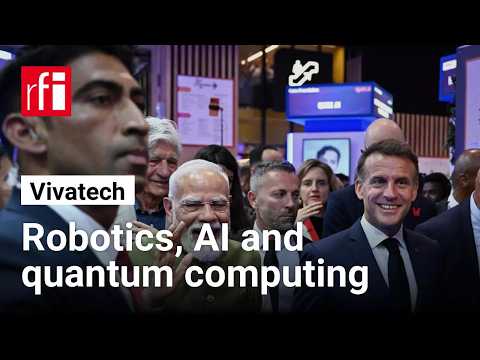
While the terrestrial charm of these technologies is undeniable, the event’s gaze stretches skyward to explore the vast expanse of space tech. Notable figures such as Jeff Bezos elaborate on space infrastructure, moving the conversation from abstract celestial mechanics to commercial viability beyond our earthly cradle. A significant diplomatic ripple is felt with the presence of India’s Prime Minister Narendra Modi and a fervent entourage of tech start-ups, symbolizing the global shift towards inclusive technological dialogue that spans oceans and borders.
This transformation of VivaTech into a tapestry of electrifying discourse and intercultural exchange underscores a key transformation. The event is not merely a showcase; it is a convergence, a nexus point for 180,000 individuals across diverse fields, coalescing over a shared curiosity and a daunting ambition to reshape their world.
In this immense confluence of ideas, one is prompted to ponder the underlying forces at work—how the narratives of AI, robotics, and quantum computing might weave through our lives in unseen ways. Are we, through understanding and innovation, shaping these technologies, or are they, quietly, shaping us instead? As the last day’s twilight settles over Paris, and the murmurs of the future dissipate into evening, attendees carry away more than just knowledge. They leave with questions that resonate like echoes, rippling outwards, seeking clarity in the overwhelming, yet beautiful complexity of a world at the edge of transformation.
—