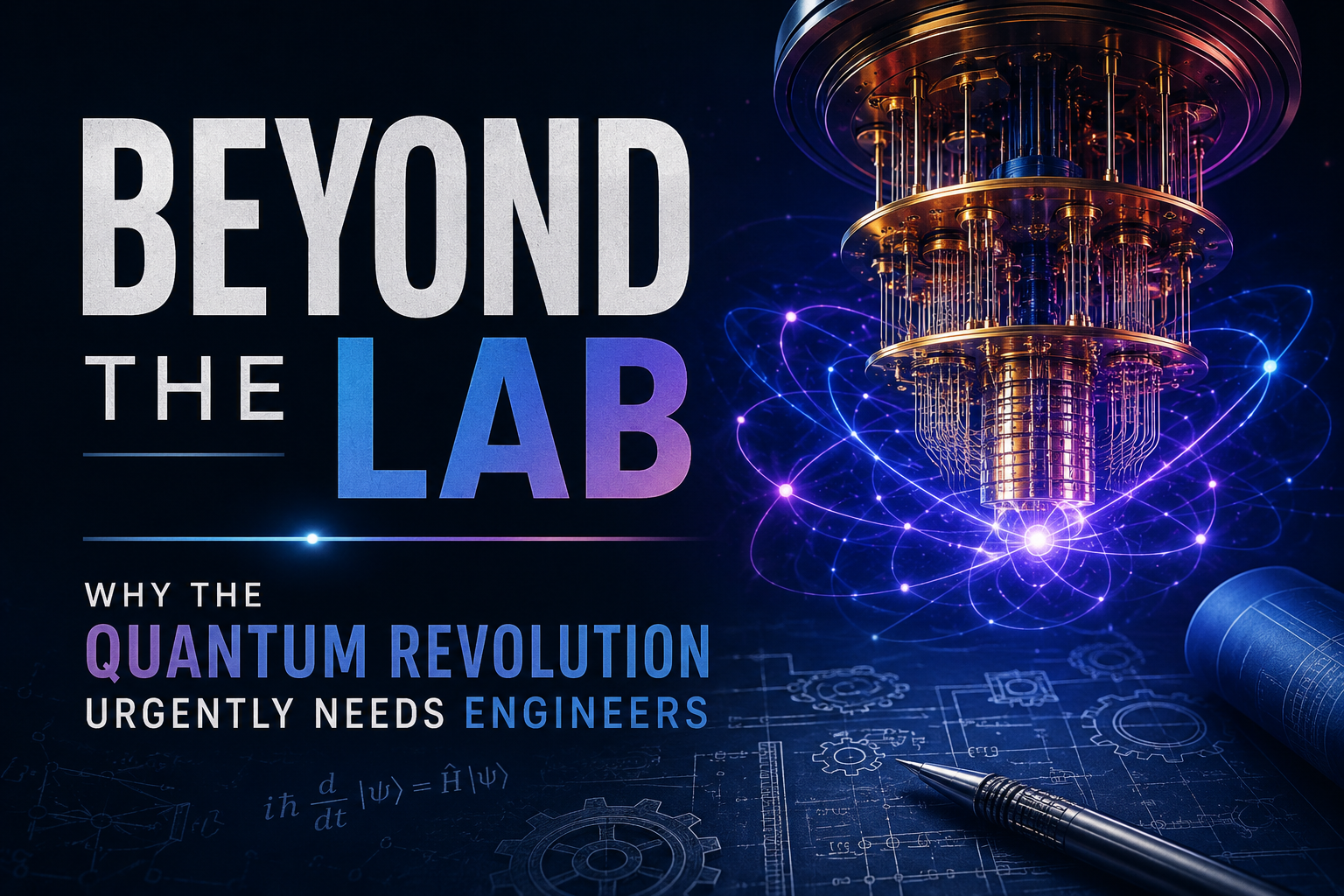
For decades, quantum computing has been the darling of theoretical physics. It lived in pristine laboratory environments, scribbled on university blackboards, and thrived in the minds of PhD researchers pushing the boundaries of quantum mechanics. But we are reaching a critical inflection point. The fundamental physics has been proven; the next monumental hurdle isn’t discovering a new particle—it’s building a reliable, scalable machine. To move quantum computing from an expensive scientific experiment into a world-changing commercial reality, the industry must shift its focus from pure science to rigorous, structured engineering.
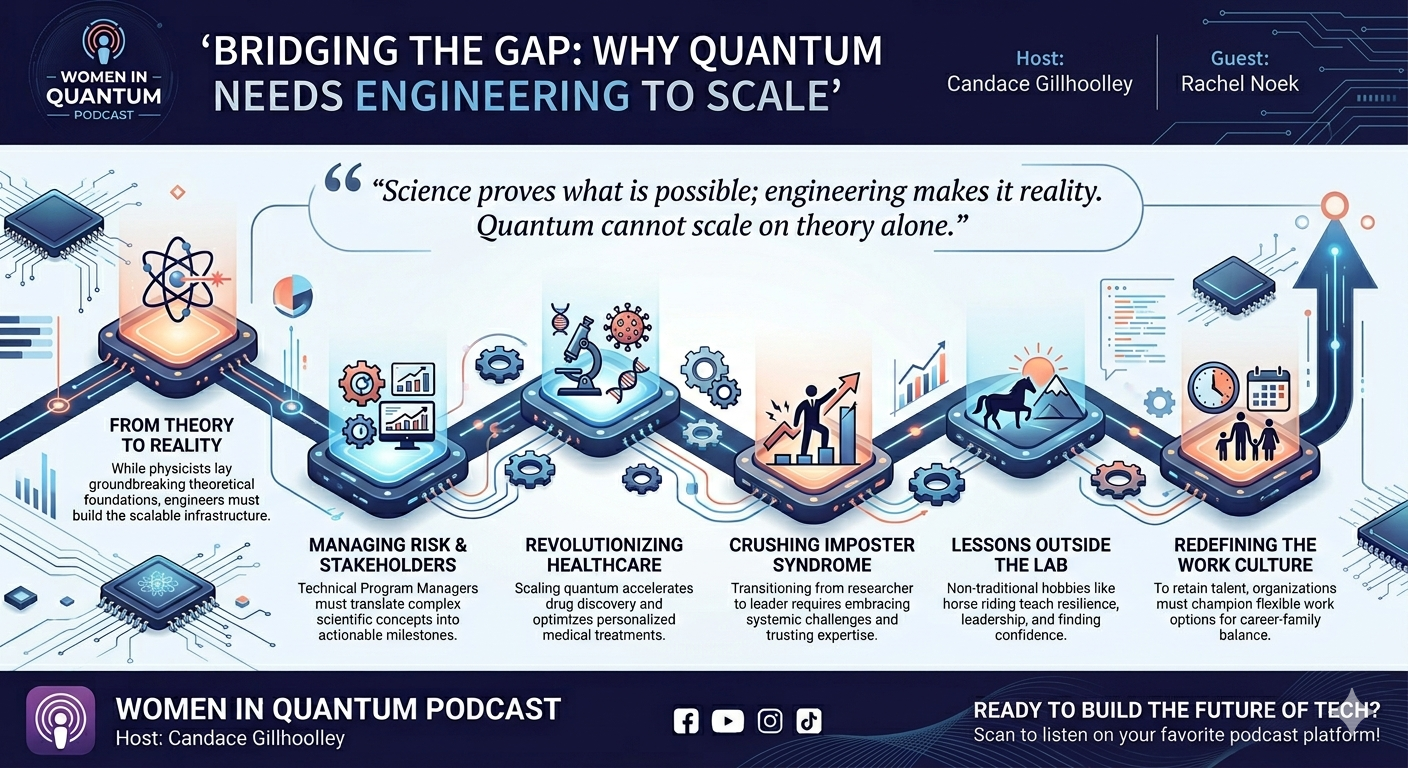
In a recent episode of the Women in Quantum podcast, host Candace Gillhoolley sat down with Rachel Noek, a seasoned Technical Program Manager in quantum computing. Rachel’s unique trajectory—stretching from the wide-open spaces of rural New Mexico to the vanguard of deep tech research—offers a masterclass in what it truly takes to scale a revolutionary technology.
1. Moving from Physics Experiments to Scalable Systems
The transition of quantum computing from a scientific endeavor to an industrial one requires a massive shift in mindset. In the early stages of any deep tech field, success is defined by a single breakthrough—a proof of concept that proves a theory is possible. But you cannot commercialize a one-off miracle.
Rachel’s early career included a pivotal internship at Sandia National Laboratories, an environment that bridges the gap between foundational science and rigorous engineering applications. It was here, and throughout her subsequent career, that the necessity of engineering infrastructure became undeniable.
“We have proven that the physics works in highly controlled, isolated environments,” Rachel notes. “But building a quantum system that runs reliably day in and day out, without a team of PhDs constantly calibrating it? That is an engineering challenge, not just a scientific one.”
To scale quantum computing, the industry needs experts who understand control systems, cryogenics, software stacks, and systems engineering. It requires professionals who can manage risk, streamline supply chains, and build the physical and digital architecture surrounding the quantum processing unit (QPU). Without this operational scaffolding, the most brilliant quantum algorithms will remain grounded.
2. Managing Risk and Bridging the Communication Gap
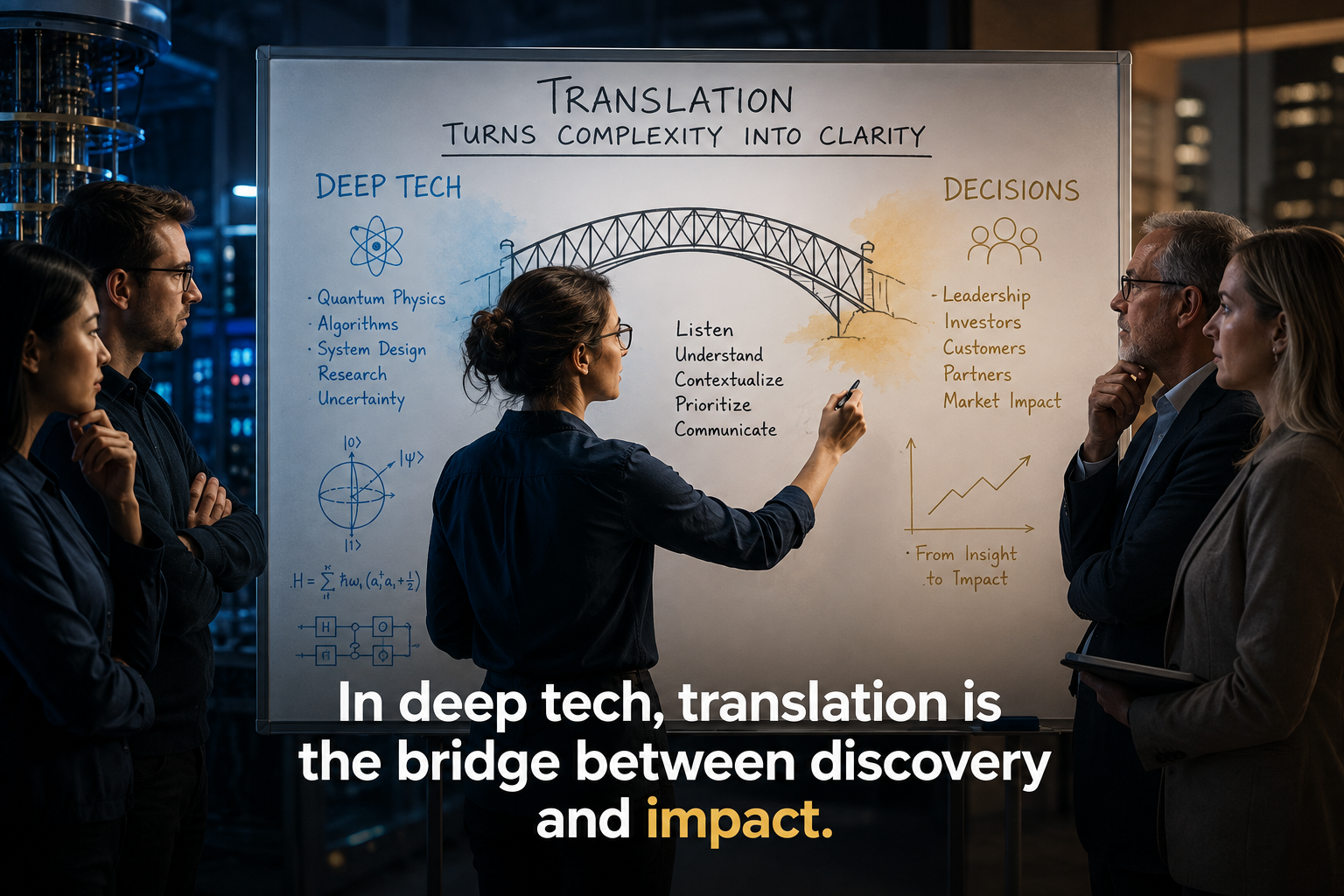
As a Technical Program Manager, Rachel operates at the intersection of diverse stakeholders—from theoretical physicists and hardware engineers to corporate executives and investors. One of the greatest challenges in deep tech is translation. A scientist may focus on optimizing coherence times, while an investor wants to know when the product will hit the market.
Effective risk management in quantum requires translating complex scientific uncertainties into actionable engineering milestones.
“Stakeholder communication isn’t just about giving status updates; it’s about managing expectations and mitigating risk,” Rachel explains. “You have to help teams see around corners, balance technical ambition with practical execution, and build a culture where risks are identified early rather than hidden.”
By implementing structured program management, quantum companies can navigate the long, capital-intensive timelines typical of deep tech without losing their operational bearings.
3. Unconventional Confidence: Lessons from the Ranch
Stepping into leadership roles within a highly technical, historically male-dominated field often brings a familiar adversary: imposter syndrome. Rachel candidly discusses her journey through these leadership challenges, revealing an unexpected source of strength and confidence—her relationship with horses.
Growing up in rural New Mexico, Rachel learned early on that leadership isn’t about shouting loudest; it’s about presence, consistency, and clear communication.
“Working with horses forces you to be entirely present and assertive,” says Rachel. “If you are anxious or uncertain, they pick up on it immediately and respond accordingly. It teaches you how to project a grounded, calm confidence—a trait that translates perfectly when you are leading a technical team through a high-pressure crisis.”
This unique background highlights a vital truth for women and minorities in STEM: confidence doesn’t always come from textbook knowledge. It is built by overcoming challenges, embracing unconventional life experiences, and proving your resilience in environments where you might initially feel underestimated.
                  ┌────────────────────────────────────────┐
                  │       The Deep Tech Leadership Loop    │
                  └───────────────────┬────────────────────┘
                                      │
         ┌────────────────────────────┴────────────────────────────┐
         ▼                                                         ▼
┌─────────────────────────────────┐                       ┌─────────────────────────────────┐
│        Presence & Calm          │                       │       Strategic Translation     │
│ Projecting grounded confidence  │                       │ Bridging the gap between pure   │
│ learned from real-world trials. │                       │ physics and market realities.   │
└─────────────────────────────────┘                       └─────────────────────────────────┘
4. Redefining the Balance: Family, Flexibility, and Letting Go
The pressure to perform in graduate research and cutting-edge corporate roles often fosters an unsustainable culture of perfectionism. For working parents and individuals balancing complex personal lives, this can quickly lead to burnout.
Rachel shares her deeply relatable experiences navigating the intense demands of graduate school and a high-tech career while raising a family. Her conclusion? The myth of “having it all” perfectly balanced at all times needs to be retired. Instead, the focus should be on flexibility and intentional choices.
- Embrace Flexible Work Options: Companies that offer flexible working arrangements retain top-tier talent, particularly women who are often balancing disproportionate caretaking responsibilities.
- Let Go of Rigid Expectations: Success doesn’t look like a flawless, linear path. It’s about adjusting your focus to what matters most in the current moment.
- Build a Support Ecosystem: Mentorship and advocacy from peers and leaders are critical pillars for long-term career sustainability.
“Letting go of perfectionism was one of the most liberating turning points for both my career and my family,” Rachel shares. “You can achieve incredible things, but you have to allow yourself the grace to realize that not every ball can be caught at the exact same second.”
5. The Real-World Horizon: Healthcare and Beyond
Why does all this engineering, management, and cultural shift matter? Because the societal payoff of scalable quantum computing is staggering.
While the industry often talks about cryptography and optimization, Rachel points to healthcare and medicine as some of the most inspiring frontiers. Scalable quantum computers will possess the computational power to simulate molecular interactions at an atomic level. This could fundamentally revolutionize drug discovery, shortening the timeline for developing life-saving medications from decades to mere months, and paving the way for truly personalized medicine.
Key Takeaways
- The Scaling Bottleneck: Quantum computing is transitioning from a scientific discovery phase to an engineering scaling phase. Infrastructure, systems engineering, and operational discipline are now the primary drivers of progress.
- Leadership is About Presence: Overcoming imposter syndrome requires drawing confidence from all areas of life. Authentic leadership relies on clarity, calm under pressure, and mutual respect.
- Ditch Perfectionism: Sustaining a long-term career in deep tech requires flexibility, prioritizing ruthlessly, and shedding the expectation of flawless balance.
To hear the full, inspiring conversation about Rachel Noek’s journey, her insights into the engineering future of quantum, and her advice on navigating deep tech careers, listen to the complete episode.