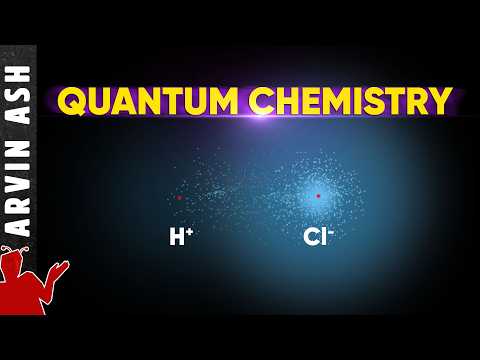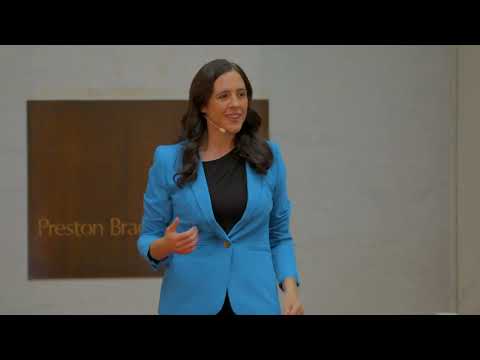
Imagine a world where the smallest units, unnoticeable to the naked eye, bear striking resemblances to us—our interactions, our communities, and even, in a sense, our emotional landscapes. Dr. Rebecca Davis, through the nuanced lens of quantum chemistry, invites us to see molecules as mirrors of humanity in her insightful TEDx talk at Wrigleyville.
Based on content from TEDx Talks
Our journey into the molecular realm didn’t unfold overnight. It is an exquisite tapestry woven over centuries through human curiosity and relentless exploration. Just two centuries ago, the notion that matter was composed of atoms was a fledgling idea. A century later, we were granted the lights of quantum mechanics, enabling us to unravel the invisible mechanics of molecular behavior—akin to peering into a hidden world where atoms and electrons dance energetically, shaping the very fabric of our existence.
Dr. Davis draws a parallel most eloquent between molecular and human interactions, suggesting that the language we use—’chemistry’—carries a dual significance. It refers not only to studying matter but also to describing the convoluted dance of human interactions. While chemists delve into the atomic scale, there is an undeniable semblance to human actions and experiences. It’s as though every interaction—serious, humorous, or tender—finds a parallel in the atomic realm, revealing a truth about our enduring nature.
The molecular world dances to the rhythms of physics and chemistry, weaving intricate patterns of bonds and transformations. Consider this analogy—predicting chemical interactions through quantum models is not unlike foreseeing the ebbs and flows of human relationships. Both are laden with variables, laden with the unforeseen. The realm of unintended results, the unpredictability, is what makes both domains fascinating and frustrating.
Within these molecular interactions lies humanity’s potential, not just in scientific advancement but in reimagining sustainable futures. Through her groundbreaking work, Dr. Davis and her team employ quantum mechanics to predict chemical properties and devise molecules tailored to our future needs. From decontaminating drinking water to crafting light-harnessing materials for future fuels, they advance beyond what nature alone could achieve. Here, the message resonates deeply: humanity’s greatest strengths lie in our capacity for creativity and collaboration.
However, understanding these entities in isolation is only part of the equation. In the quantum realm, as in life, context matters. Just as social dynamics affect societal change, molecular interactions depend heavily on the environment. It’s a reminder that whether crafting a new drug or navigating complex social systems, harnessing the collective, understanding the whole, is as critical as understanding the parts.
Dr. Davis—a recognized force in organic and computational chemistry—stands as a beacon of progress. Her tenacity toward sustainable chemical processes not only revolutionizes the synthesis of pharmaceuticals but champions diversity in science. By co-founding the Working for Inclusivity in Chemical Sciences group, she advocates a richer inclusivity in STEM, ensuring no voice is left unheard in the scientific narratives.
In closing, as molecules converse quietly amongst themselves, mirroring the essence of our human capability and limits, Dr. Davis beckons us to take heart. In those molecules, we can reflect upon humanity’s creative spirit, its potential to elevate, even amidst perceived inertia. The next time you feel disenchanted with humanity’s slow progress, think of a molecule—how its silent transformation amid chaotic environments reminds us of our boundless capacity to imagine and create.
—