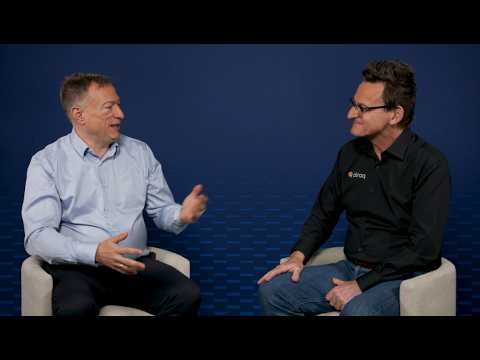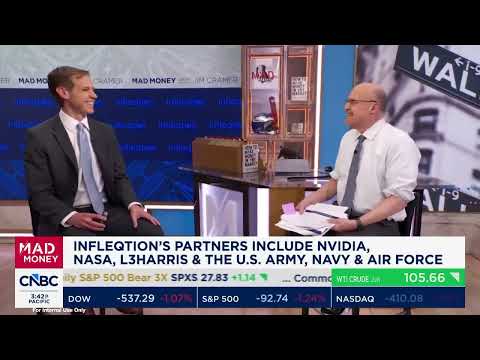
The realm of quantum computing often feels like an intricate tapestry, woven with threads of potential and uncertainty. It sits at the threshold of the known, waiting to leap into the extraordinary, a sentiment not lost on CNBC’s Jim Cramer, who recently sat down with Matt Kinsella, the discerning mind helming Inflection. Their conversation unfolds not just as a meeting of minds but as a glimpse into the vast, still-forming landscape of quantum innovation.
Based on content from Infleqtion
As the light filtered softly through the studio, casting flickering shadows against the backdrop of digital screens, Kinsella spoke with a quiet authority. “Infleqtion is a neutral atom quantum technologies company,” he explained, describing how they manipulate millions of atoms with laser precision. Yet, beyond this technical prowess, what resonates is Infleqtion’s strategic focus—a calculated dance between immediate commercial gains and future quantum breakthroughs.
Therein lies a core philosophy: stepping stones of today become the pillars of tomorrow. As complex as quantum technology may seem, its applications—in fields like national security and encryption—have the power to redefine paradigms. When Kinsella discusses partnerships with giants like NVIDIA, NASA, and the Pentagon, it’s not name-dropping; it’s strategic symbiosis. These alliances are paradigms themselves, serving not as stepping stones, but as a network of bridges between quantum potential and practical reality.
The conversation flows, touching upon the “Golden Dome” initiative aimed at hypersonic missile detection. Here, the vivid imagery of quantum effects knitting together a defensive strategy against existential threats feels almost poetic. The precision required for such coordination is measured, not just in seconds, but in ‘picoseconds,’ hinting at a future where the fine balance of time and matter can alter the landscape of global security.
Underneath the advancement, discussions turn to a more commonplace realm: encryption and the shimmering allure (or dread) of cryptocurrency. Kinsella, with a placid certainty, addresses the fear that quantum computing might one day unravel cryptographic algorithms. For now, these concerns remain speculative, as the quantum race continues. But acknowledging these concerns underscores the pressing need for dialogue between technological innovators and policy makers to safeguard tomorrow’s digital society.
What Kinsella implicitly suggests, and which Cramer articulates, is the financial alchemy within this quantum journey. Infleqtion’s ambition to bridge immediate revenue through quantum sensing technologies while building towards the expansive promise of quantum computing mirrors NVIDIA’s journey from gaming to AI. This approach hints at sustainability in an often fickle technology market, where today’s speculational enthusiasm can turn into skepticism overnight.
In the soft cadence of the conversation, there’s a warm glow of quiet, relentless optimism. Cramer, ever the voice of economic pragmatism, acknowledges quantum computing as a game-changer—a notion entwined with timelines and expectations that are usually decades, not fiscal quarters, distant.
As they signed off, the interview left behind echoes—questions of how we will adapt to the transformative potential quantum could offer and what societal shifts must accompany its technological strides. Between the lines of this conversation lies a deeper understanding of how intertwined our futures are with these quantum characteristics, still flickering in their nascent stages.
As we peer into this crystal ball, the quantum game is not in the years we’ve seen but in the decades that lie untold. For readers and viewers both, perhaps the most resonant takeaway is a question as much introspective as it is forward-looking: How do we align our present engagements to optimize a future rich with possibilities, all while being mindful of the labyrinth of quantum’s potentials?
—