Do you remember that first foray into chemistry, struggling with periodic tables, memorization, and what seemed an insurmountable pile of facts? You wouldn’t be alone if you approached it with reluctance, sensing the complexity but not quite grasping its underlying order. Yet beneath that surface of elements and reactions dwells a secret that quietly frames our universe: the realm of quantum chemistry.
It might sound esoteric at first, like something only meant for bespectacled scientists with chalk-stained lab coats, but at its heart, quantum chemistry is profoundly intuitive. It rests upon a single, minute player in the atomic performance: the electron. These tiny negatively charged particles might seem minor, but their behavior orchestrates the grand dance of chemical reactions, shaping everything from the glittering structures of crystals to the buzzing processes within our own cells.
Based on content from Arvin Ash
The story starts with the Schrödinger equation, an elegant equation in quantum mechanics from 1925 by Erwin Schrödinger. It transformed our understanding of electrons, ushering a departure from fixed orbits to the ethereal concept of wave-like behaviors. This idea of wave-particle duality reveals electrons not as particles on predictable paths, but as waves creating regions of probability—a picture of where they’re most likely found. These probabilistic regions, called atomic orbitals, form the scaffolding of electron shells within each atom.
Take the periodic table—what might appear as a chart is truly a map of these orbitals. Each row, journeying through elements, represents the increasing complexity and configuration of electron shells, adding depth and form to atomic behavior. For instance, noble gases reside gracefully at the table’s right edge, their electron shells filled and stable, echoing serenity and non-reactivity. Other elements, still hungry for stability, share or exchange electrons in a relentless quest for lower potential energy.
Electronegativity—a term that sketches the landscape of chemical bonds within molecules—reflects an atom’s desire to attract electrons. A molecule becomes a tapestry of slight positive and negative polarities when electronegativities differ, crafted by nature’s own rules of attraction. The dance gets intricate when elements such as fluorine join, the most electronegative of them all, eager to extract electrons so pristine that they drive the powerful behavior dramatized in acids.
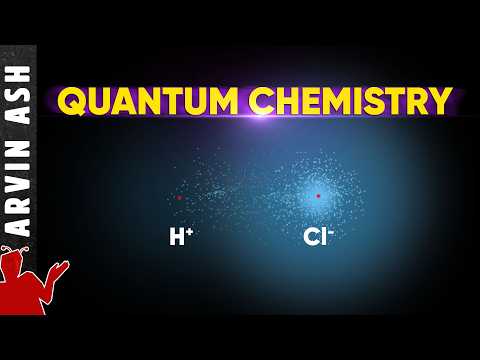
Consider hydrochloric acid (HCl), where electronegativity leads chlorine to seize the electron from hydrogen, almost reducing it to a mere proton. Once dissolved in water, what remains is a cascade of proton exchange—a choreography of electron clouds asymmetrically drawn towards chlorine, setting the pulse of proton donation that makes HCl an acid. This quantum choreography doesn’t only dance in laboratories; it plays a vital role in our digestion, breaking protein bonds and unleashing nutrients.
Even on the industrial stage, quantum chemistry’s grasp is firm. Superacids, like fluoroantimonic acid, can transcend typical protonation boundaries, transforming hydrocarbons in ways ordinary acids cannot match. Such acids emerge as pivotal tools in refining fuels, highlight chemistry’s potential to reshape worlds both large and small.
And there, in the quiet corners of chemical structures, the foundation of our universe stands. The electron, in all its subtlety, challenges us to see beyond the chaos of complexity to an elegant structure filled with potential. From quantum mechanics emerges clarity—a realization that these invisible dances govern the massive and the minute, the cosmic and the cellular.
So next time a subject appears insurmountable or convoluted, remember the comforting unity hidden within. Chemistry, in all its forms, whispers the secrets of existence, inviting any observer willing to see its harmonious patterns. What else might we learn if we considered electrons not just as spectators, but as active players in our understanding of life?
—