What if the universe isn’t just out there—but also in here?
For centuries, science and spirituality have been cast as opposites. One dissects the measurable; the other explores the intangible. But what if they’re not rivals at all—just two sides of the same cosmic coin?
Recent discoveries in quantum physics are unraveling long-held boundaries, suggesting that consciousness may not merely observe reality, but actually help shape it.
The Observer Effect: Quantum Weirdness Unveiled
In the quantum realm, nothing is definite until it’s measured. Before we look, particles behave like waves—existing in a haze of possibilities. But the moment we observe them, they “collapse” into something specific. One form. One place. One outcome chosen from countless potentials.
This is the Observer Effect—a cornerstone of quantum strangeness.
Yet reality doesn’t stay this strange forever. Once a system interacts with its environment, decoherence occurs, causing quantum ambiguity to dissolve into the structured, stable reality we experience every day. Without us, reality dances in potential. With us, it chooses a form.
Entangled Minds: Could Our Thoughts Be Connected?
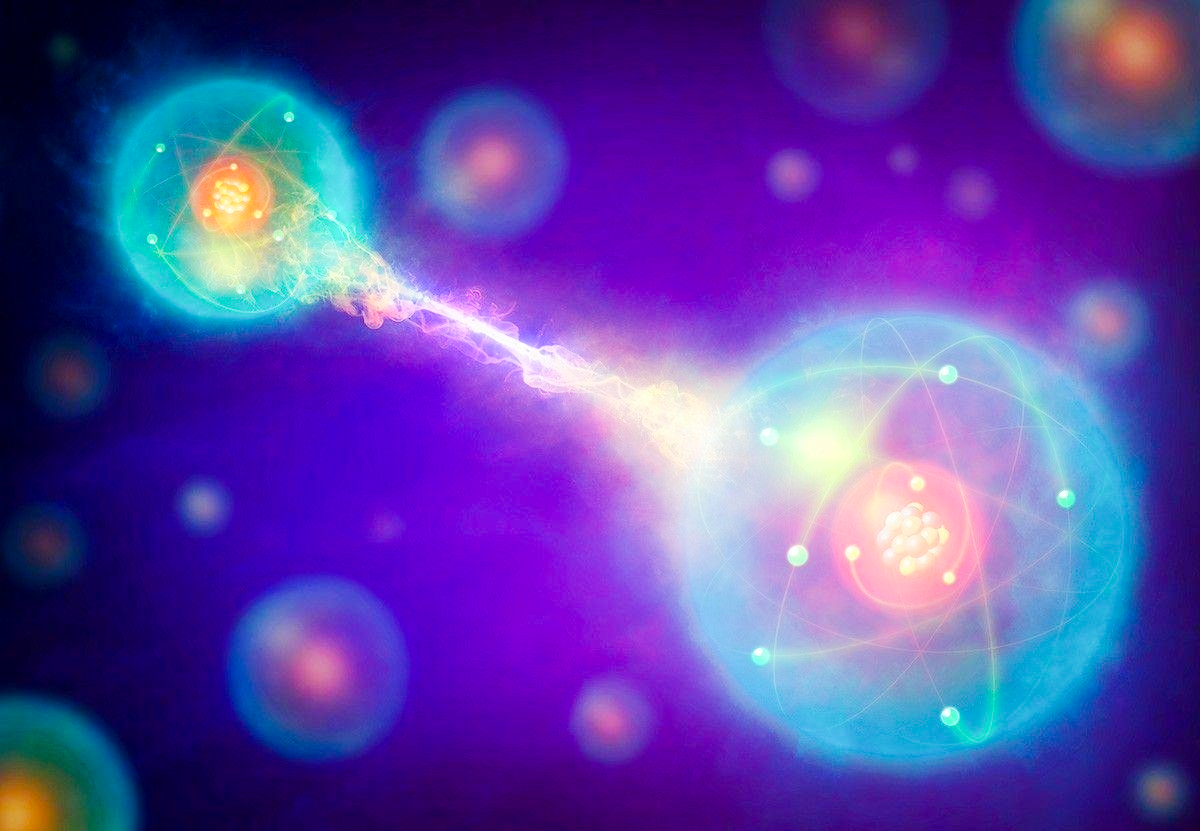
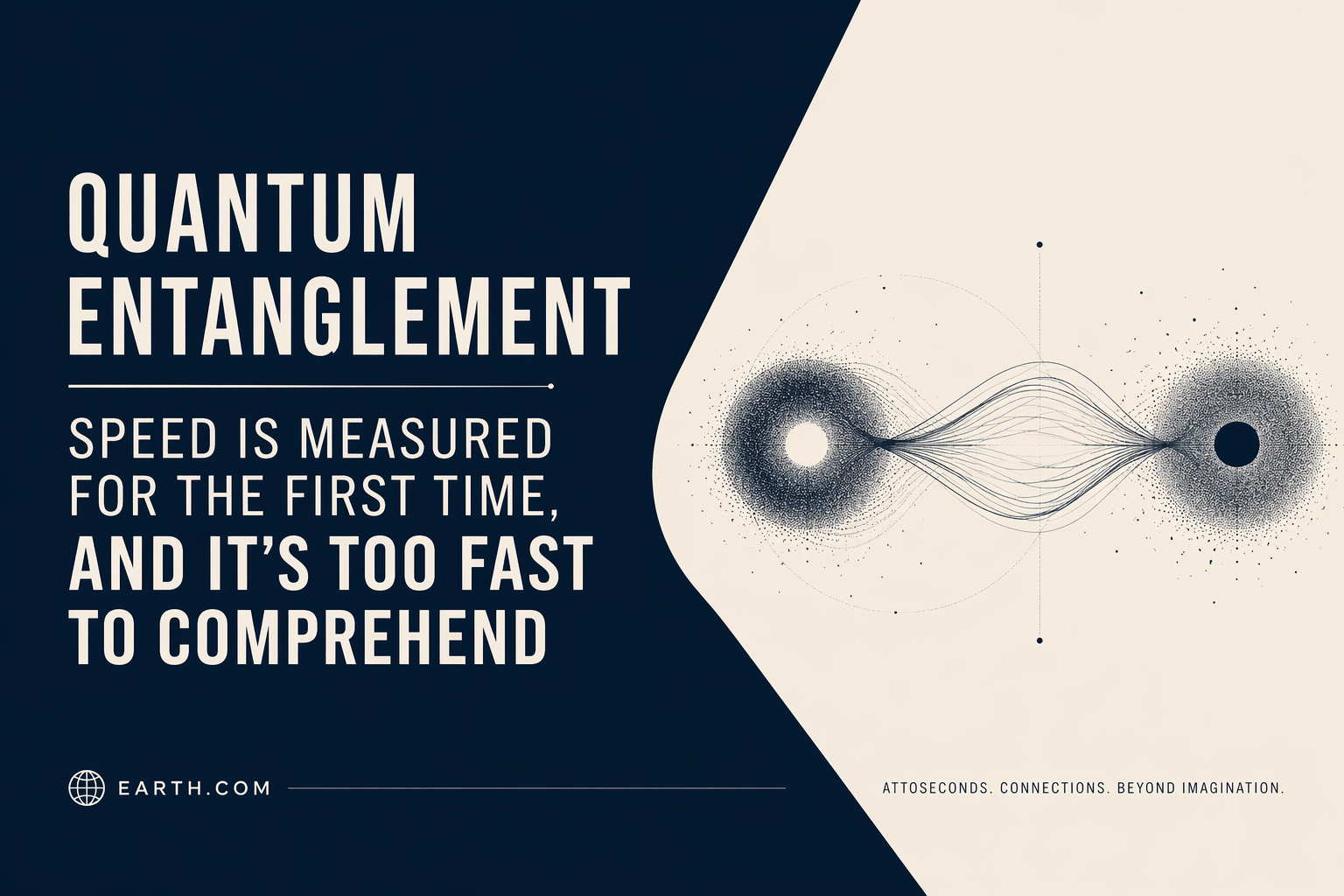
Quantum entanglement demonstrates that two particles—regardless of how far apart they are—can become instantly linked. Change one, and the other responds, faster than light, with no detectable signal.
If matter can do this, could minds do something similar?
What if human intuition, shared insights, or even the eerie feeling of knowing what someone’s about to say aren’t just accidents—but echoes of a deeper quantum connection?
Some scientists believe it could be more than a metaphor. The Integrated Information Theory, for example, suggests that consciousness may be a fundamental property of the universe—on par with gravity or mass—rather than a by-product of brain chemistry.
In this view, you don’t simply have consciousness. You are consciousness, expressing itself through a body.
The Universe as a Simulation: A Quantum Perspective
Some physicists are now asking a more provocative question: Is reality itself a kind of program?
The Computational Universe Hypothesis suggests that the laws of physics behave like code—governing information, probability, and processing in ways that resemble an unimaginably advanced operating system.
Zoom in far enough, and the building blocks of the universe aren’t solid. They’re packets of information. Not particles, but something closer to pixels.
If that’s true, we may not just be participants in this simulation—we may be part of the code that’s running it. Whether through thought, observation, or attention, we might be actively shaping the fabric of what we call “real.”
Let’s return to where we began:
What if the universe isn’t just out there—but also in here?
Not just a backdrop we exist within, but a process we’re part of—perhaps even essential to.
Maybe the most radical discovery isn’t in the stars or the atoms, but in the realization that we are the observer, the observed, and possibly even the dreamer of the whole thing.