A Dutch quantum chip company, QuantWare, has partnered with C-DAC, India’s premier government agency for advanced computing. Together, they’re working on hybrid computing systems that combine traditional supercomputers with quantum processors.
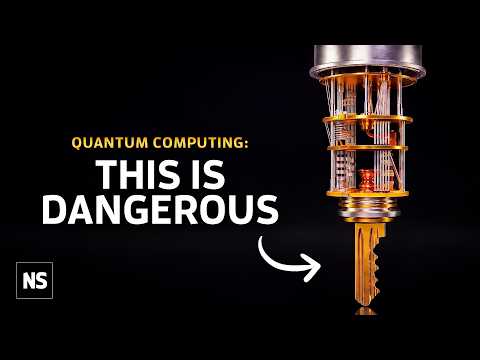
Even your most “secure” encrypted data could be exposed when quantum computers arrive—unless you change how encryption works at the core.
This isn’t just about building better machines—it’s about blending two fundamentally different types of computing power. Supercomputers excel at brute-force calculations, while quantum computers use the oddities of quantum physics—superposition and entanglement—to explore many possibilities at once. They’re ideal for solving problems that are too complex for classical computers alone, like drug discovery, cryptography, or materials science. But quantum systems are still fragile and experimental, which is why pairing them with stable supercomputers makes sense. Hybrid systems create a bridge between what’s possible today and what might be possible tomorrow.
For India, this partnership checks several strategic boxes. First, it supports self-reliance in advanced tech—building quantum components in-house rather than importing them. Second, it empowers Indian scientists and universities by giving them access to cutting-edge quantum hardware. And third, it ties directly into broader national goals like the National Quantum Mission and efforts to grow a domestic semiconductor industry.
QuantWare, on the other hand, brings its rare ability to manufacture quantum chips at scale. C-DAC brings decades of experience in classical high-performance computing, as well as the institutional support of India’s tech ecosystem. The two complement each other well—one with hardware, the other with infrastructure. This move signals something bigger. It’s not just a collaboration; it’s a shift in position. India is stepping into the next generation of computing not as a bystander but as an active participant with its own technology, its own strategy, and a seat at the global table.
Stay Connected
Follow our journey and be part of the conversation:
🔗 Find us on LinkedIn
📬 Join our mailing list
📺 Subscribe to our YouTube channel