For those watching the edges of what’s possible in computing, something quietly significant just happened in southern India.
IBM, in partnership with Tata Consultancy Services (TCS), has announced plans to build a state-of-the-art Quantum Computing Center in Amaravati, Andhra Pradesh, with operations set to begin by March 2026. This isn’t just a headline—this is a signal. A shift. India is stepping into the global quantum conversation with intention and momentum.
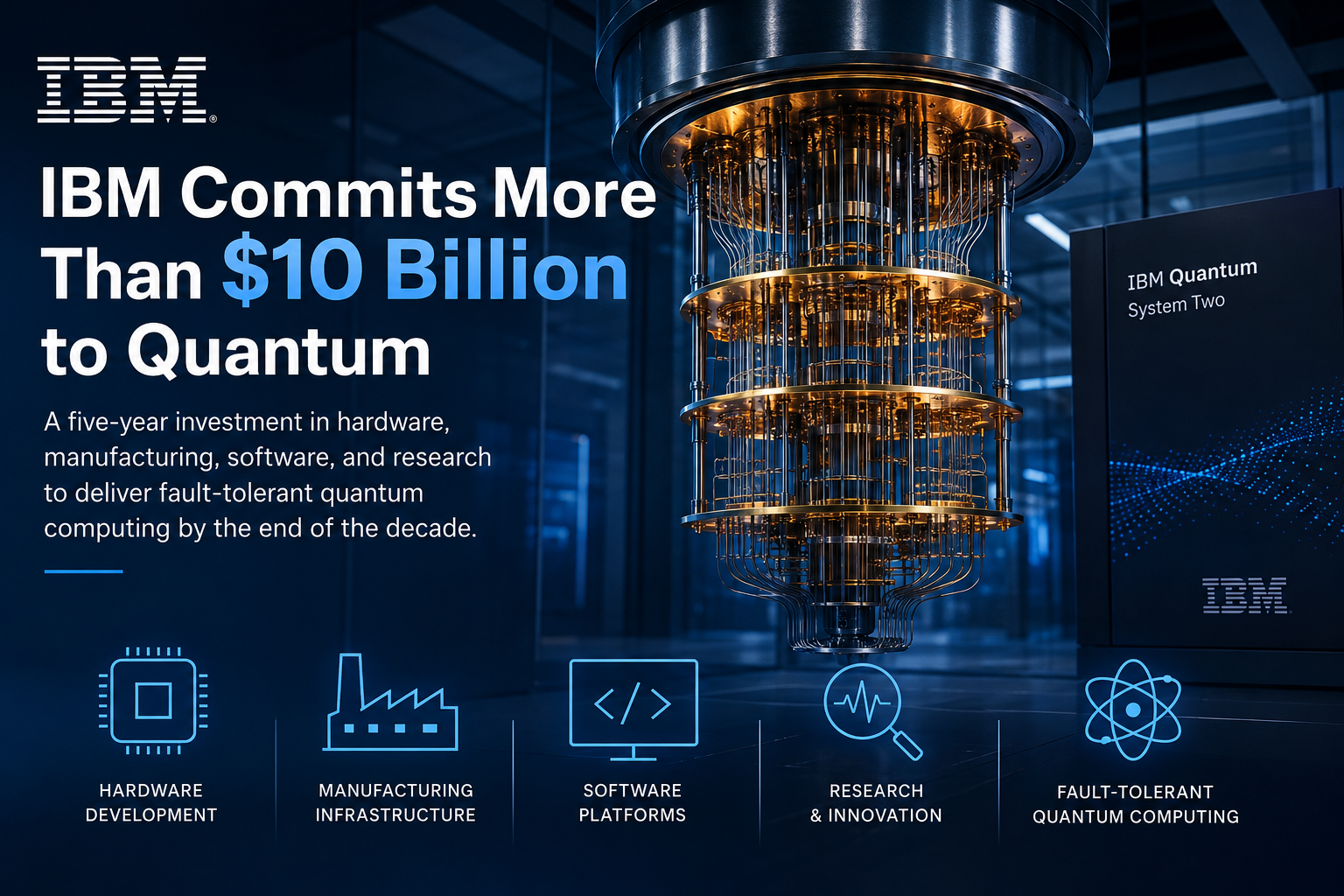
At the heart of this new center will be IBM’s 156-qubit Heron processor. For the uninitiated: qubits are to quantum computers what neurons are to brains. But unlike the rigid binary bits of classical computers, qubits operate in a world of probability, superposition, and entanglement. The more of them you can control reliably, the more complex the problems your system can solve.
With 156 qubits, the Heron processor is not a toy. It’s a serious research engine, capable of taking on grand challenges in fields like drug discovery, materials science, and optimizing global supply chains.
But this initiative isn’t only about raw computational power. It’s also about control and collaboration. The Heron processor will be cloud-accessible, opening its doors to researchers, developers, and institutions around the world. At the same time, it will comply with India’s sovereign data requirements—allowing the country to conduct high-security and sensitive quantum research within its own borders. That balance between openness and sovereignty is no small feat.
What’s emerging in Amaravati isn’t just a lab. It’s the beginning of what’s being called India’s first “Quantum Computing Valley”—a full-fledged ecosystem designed to nurture talent, enable innovation, and translate quantum promise into real-world impact. Developers, startups, students, and researchers will have direct access to world-class infrastructure, along with pathways into academia and industry. This is where quantum ideas meet scalable opportunity.
For India, this is a shift from being a consumer of advanced technologies to becoming a global contributor. As quantum efforts accelerate in the US, Europe, and China—with each region taking its own approach—India’s move adds a new voice to the dialogue. Not a follower, but a collaborator. A co-architect of the quantum future.
It’s also a strategic economic play. As artificial intelligence, cloud computing, and quantum technology increasingly converge, the countries that control these intersections will shape not just industries, but global narratives. The creation of a quantum valley in Amaravati isn’t just about research; it’s about creating jobs, drawing investment, and designing the future.
For those curious about where quantum computing is headed, Amaravati just became a name to remember. This isn’t the end of the beginning—it’s the beginning of something bigger.
And for the quantum-curious? There’s never been a better time to lean in.
Stay Connected
Follow our journey and be part of the conversation:
🔗 Find us on LinkedIn
📬 Join our mailing list
📺 Subscribe to our YouTube channel