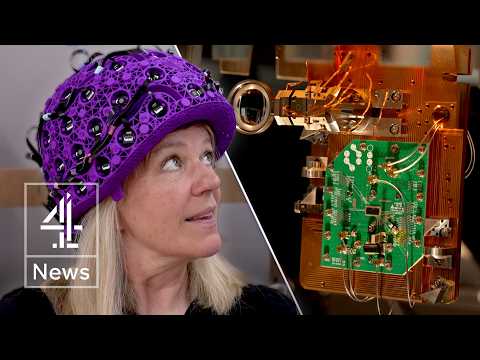
You may not see it or feel it as you move through your day, but we’re living in a quantum world. Above the apparent solidity of trees, beneath the seemingly predictable skies, there exists a realm where the normal rules of nature unravel. Here, at the atomic scale, particles can exist in multiple places at once, following all possible paths simultaneously, a phenomenon formally known as quantum mechanics.
The British government is adamant that harnessing the mysteries of this hidden world represents a once-in-a-generation opportunity. It’s a sentiment echoed in boardrooms and laboratories globally, as nations recognize quantum computing’s potential to revolutionize artificial intelligence, accelerate drug development, and transform our approach to mankind’s greatest challenge—climate change. It’s no small wonder that the UK chancellor has pledged £2 billion to this cause, thrusting Britain into the international spotlight as a key player among giants like the US and China, who similarly invest billions into quantum technology.
Based on content from Channel 4 News
In Oxford, a company born from university brilliance stands as a microcosm of this technological vanguard. Through its tiny chips, atoms float, impossible and real, forming the backbone of computation processes once thought unsolvable. Here, physicists like Chris Ballance are daring to dream in ways that transcend traditional computing norms, enabling quantum computers to explore myriad possibilities at once and deliver solutions with unprecedented speed.
Imagine, if you will, a maze. A traditional computer, linear in its approach, must navigate each path sequentially, testing dead ends before finding a way through. A quantum computer, however, visualizes every turn at once, computing the solution near-instantly. This capability could have a significant impact on fields ranging from logistics to healthcare.
Consider the quantum-assisted epilepsy center in Surrey, where sensors map brain waves with pinpoint precision to guide life-altering surgeries with an accuracy that modern technology has only begun to understand. Such applications only scratch the surface of quantum’s promise.
Yet, the sparks of potential are shadowed by the familiar specter of economic competition. The UK, despite its historic role as an incubator of innovation, often sees its breakthroughs exported, transformed into commercial successes on foreign shores. As quantum technology enters its nascent stages and evolves rapidly, there is both a risk and an opportunity. The concern remains: will British ingenuity be harnessed thoroughly to glean the economic harvest, or will it be another chapter of missed chances?
As British scientists plant the seeds of this new frontier, the question lingers—can the UK transform groundbreaking research into economic muscle? Or will liquidity pools in the US, known for absorbing talent and idea alike, attract our quantum pioneers away?
Ultimately, quantum’s success may lie not merely in individual innovations but in how integrated, supported, and commercialized they become. As the world casts its eyes on this race, there’s an implicit call for strategies that engage both public investment and private initiative. The impetus is clear: the demand for quantum’s transformative potential is enormous, and how we navigate this evolving landscape promises to define an era.
The quantum boom has commenced, offering us not just a peek into the future, but the challenge to shape it. As you ponder these unfolding possibilities, consider how they might alter not just industries but the fabric of everyday life itself. The next steps taken by the UK—and indeed, the world—will determine how this complex technology unfolds, deepening our understanding of the universe in ways yet to be imagined.
—