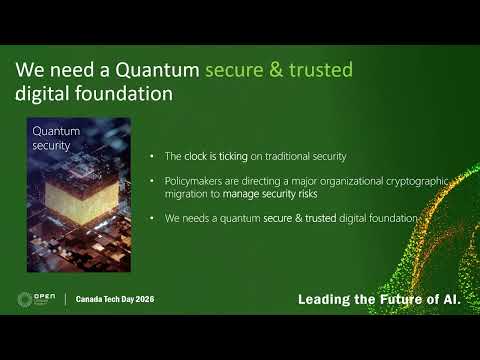
In a recent announcement that could reshape our understanding of cybersecurity, Google cautioned that quantum computers might pose a more immediate threat to the encryption safeguarding cryptocurrencies than previously anticipated. This revelation has sparked discussions on the fragility of current cryptographic methods against the accelerating advancement of quantum technology.
Based on content from CNET
The Quantum Frontier
Quantum computers offer a revolutionary leap in computational power by leveraging the bizarre properties of quantum mechanics. Unlike classical computers, which process data in binary (0s and 1s), quantum computers use qubits, capable of existing in multiple states simultaneously due to superposition. This allows them to perform complex calculations at breathtaking speed, potentially rendering certain encryption methods obsolete.
Assessing the Threat
Google’s researchers have indicated that the quantum computational power required to crack the encryption currently protecting most cryptocurrencies is significantly less than prior estimates—about twentyfold less. This revelation is ushering in concerns about “store now decrypt later” attacks, where hackers could begin stockpiling encrypted data, anticipating future breaches.
The Shift to Post-Quantum Cryptography
To address this looming threat, Google plans to transition to post-quantum cryptography by 2029. These advanced cryptographic techniques are designed to resist decryption by quantum computers. Already, several technology leaders are adopting such strategies. In 2023, Signal became the first mainstream messenger to integrate post-quantum cryptographic safeguards, followed by Apple’s rollout for iMessage in 2024.
Understanding Post-Quantum Cryptography
At its core, post-quantum cryptography involves utilizing mathematical problems that remain challenging for quantum computers to solve. Colton Dylan, CEO of Postquant Labs, succinctly explains, “All we do when we use quantum resistant cryptography is just to choose the type of math that quantum computers are bad at.”
The Power and Possibility of Entanglement
The concept of entanglement, where quantum computers can become linked to exponentially boost their processing power, is a key focus in the landscape of quantum computing. A landmark experiment in 2025 by Oxford researchers demonstrated the feasibility of linking two quantum computers, propelling the idea of a global quantum network.
As the world prepares for a quantum computing future, it is imperative to ask: Are you ready to protect your data from quantum threats? Join the conversation below, and let us know how you’re securing your digital assets in anticipation of this transformative technology.
For an in-depth exploration of quantum computing, including a look at different types of quantum computers, explore our recommended video curated just for you!