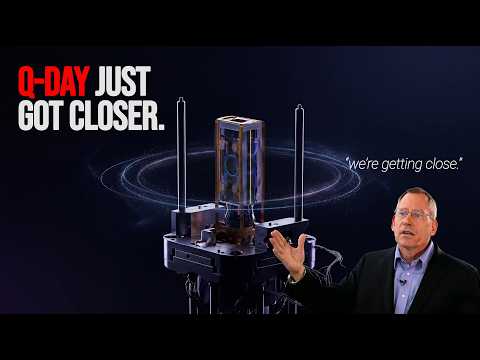
Recent findings by Google Quantum AI and Caltech luminary John Preskill illuminate a rapidly approaching horizon. Notably, Google’s March 2026 paper suggests that breaking elliptic curve cryptography could require fewer than 500,000 qubits—a stark reduction from prior estimates. The implications are vast, as attack timelines are now measured in minutes rather than days.
Based on content from The Quantum Bull
A Shrinking Timeline and Revolutionary Discoveries
Highlights from the Google research underscore a transformative trend: harnessing greater quantum power with dramatically fewer qubits. Just last year, one million qubits seemed essential; today, estimates have plunged to 500,000, thanks to a breakthrough in error correction. Preskill’s work at Caltech complements this narrative, proposing that useful quantum computing might soon be achievable with as few as 10,000–20,000 qubits.
Implications for Global Cybersecurity
The acceleration toward Q-Day has reverberated across the digital landscape, stirring concern especially within cryptocurrency circles. The prospect of quantum attacks poses a systemic risk to platforms like Bitcoin and Ethereum, urging cybersecurity experts and governments alike to collaborate on preventive strategies.
Significantly, Google’s latest paper adopts a cautious approach by withholding detailed quantum circuits, instead opting for zero-knowledge proofs. This move marks a shift toward a more guarded stance in quantum research dissemination, given the national security stakes involved.
A Call to Action
The convergence of enhanced algorithms, efficient error correction, and hardware advancements underscores the urgency of preparing for a post-quantum future. For industry stakeholders, this means prioritizing adaptation strategies to safeguard against the looming quantum threat.
As the quantum compute revolution accelerates, the urgency to transition to post-quantum cybersecurity solutions becomes paramount. How we navigate these developments will define the resilience of our digital future, making it an exciting, albeit challenging time for quantum scientists and technologists alike.
Discover more updates and insights on this evolving topic by visiting The Quantum Bull.