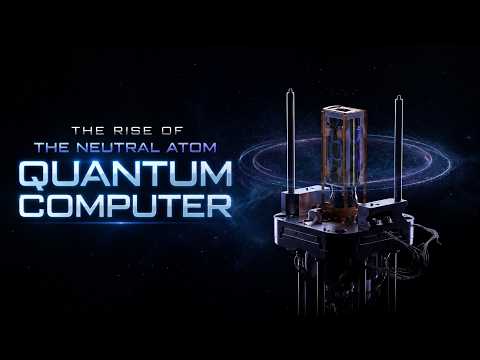
At Duke, work is underway to build what could be described as one of the most powerful computers of its kind—a large quantum computer. This isn’t your average tech upgrade; we’re not talking about faster processors or more memory. No, we’re diving into the realm of qubits and quantum mechanics, areas where our usual rules of computing don’t just bend; they twist and turn in mesmerizing ways.
Quantum computers operate fundamentally differently from the classical computers we use daily. By trapping individual atoms and manipulating them with lasers, these computers use the energy states of atoms to store and process information. This is where normal computers, which use bits as the smallest unit of data, pale in comparison. Quantum computers use qubits, allowing them to process complex calculations at speeds unfathomable by current standards.
This video is from ABC11
Nathan Taylor, a graduate student involved in the project at Duke, touched on the anticipated capabilities of their quantum system. It promises not only to bring advanced computational power but also to expand the frontiers of industries like chemistry and finance. The allure of quantum computing lies in its potential to tackle what are today considered unsolvable problems by greatly enhancing calculating capabilities.
From what we understand so far, the excitement around quantum computing in scientific circles can be likened to the excitement one feels when on the verge of a breakthrough—the kind of breakthrough that redefines fields and spins off entirely new industries.
Interestingly, Duke’s researchers believe that their quantum system could be the first to outperform classical computers in specific scientific applications. This isn’t just improvement; it’s a game-changer.
And there’s more to it than mere technological prowess. Taylor highlighted a critical facet worthy of reflection—the ecosystem surrounding quantum computing in their locality, known as Bull City. He noted the presence of several startups but pointed out a gap: the lack of substantial industry infrastructure that could bolster this burgeoning field. His vision? To create a feedback loop that not only fosters academic and professional interest in quantum computing but also integrates it deeply into the community.
The implication here is profound. It’s not just about creating a machine; it’s about cultivating an environment where academia, industry, and community intersect to push the envelope of what’s scientifically and commercially viable. This kind of synergy could well be the catalyst that propels quantum computing from a niche scientific endeavor to a cornerstone of technological advancement.
So, where do we stand? On the cusp of a revolution, perhaps. As researchers like those at Duke push forward, they don’t just build computers; they’re constructing the future framework of problem-solving at scales we are only beginning to understand. They challenge us to think differently about everything from materials science to financial models and beyond.
The journey to understanding and mastering quantum computing is akin to recalibrating your car’s engine to not just perform better but to redefine what performance means. It’s about overhauling our problem-solving tools to take on the quantum age.
As we continue to observe these developments, it’s essential to stay informed and engaged, recognizing that the unfolding quantum era won’t just change computers. It will change the way we approach the mysteries of the universe, one qubit at a time.