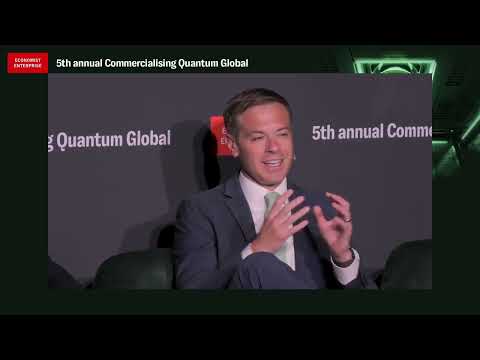
Before this conversation, I believed that quantum computing was a futuristic and enigmatic concept, combining elements of science fiction and academic enigma. However, Nati Erez, the Director of Quantum Applications at Classiq Technologies, completely changed my perspective in this episode.
Nati clarified early on that quantum computers are more than just “faster” computers. They’re different. They’re designed to solve specific classes of problems that trip up even the most powerful classical systems. Consider optimization puzzles in logistics, intricate scheduling, or chemical simulations, where even “good enough” solutions often require substantial amounts of trial and error. Quantum promises something better: more precise answers to deeply complex questions.
One of the ideas that stuck with me most was the role of abstraction in quantum programming. It’s a concept familiar to anyone who’s ever written code in Python instead of assembly. You don’t have to wrangle qubits at the gate level anymore—Classiq’s platform lets developers define problems in higher-level terms, and it handles the translation into quantum circuits tailored to different hardware platforms. That changes everything. It opens the field to software developers, applied mathematicians, and creative problem-solvers from non-physics backgrounds.
Still, Nati didn’t shy away from the hurdles ahead. The hardware isn’t quite there yet. We’re in what he called an exploratory phase, where proofs of concept are blooming but large-scale impact is still emerging. But here’s the good news: over the next 2–5 years, we may reach quantum advantage—that moment when quantum systems solve real-world problems more effectively than classical ones. And when that happens, businesses will need more than physicists. They’ll need cross-functional teams: engineers, domain experts, and yes, even marketers who can communicate the why—not just the how.
What I appreciated most was Nati’s encouragement to those of us just getting curious about the field. You don’t need a PhD or a lab coat. There are simulators, tutorials, and learning communities out there. What matters is interest and persistence. Quantum is becoming more accessible by design, and there’s space for diverse voices to shape its direction.
This conversation left me thinking: maybe quantum isn’t about replacing everything we know. Perhaps it’s about broadening the questions we can ask and the quality of the answers we get.
Stay Connected
Follow our journey and be part of the conversation:
🔗 Find us on LinkedIn
📬 Join our mailing list
📺 Subscribe to our YouTube channel