In the early days of any breakthrough technology, attention tends to cluster around the most visible heroes. In quantum computing, those heroes have largely been physicists, hardware engineers, and algorithm researchers pushing the boundaries of what is scientifically possible. Their work is essential. Without it, the field would not exist.
But something interesting is happening as quantum begins its slow transition from laboratory promise to enterprise curiosity.
A new bottleneck is emerging.
And it is not coming from the dilution refrigerator.
It is coming from communication.
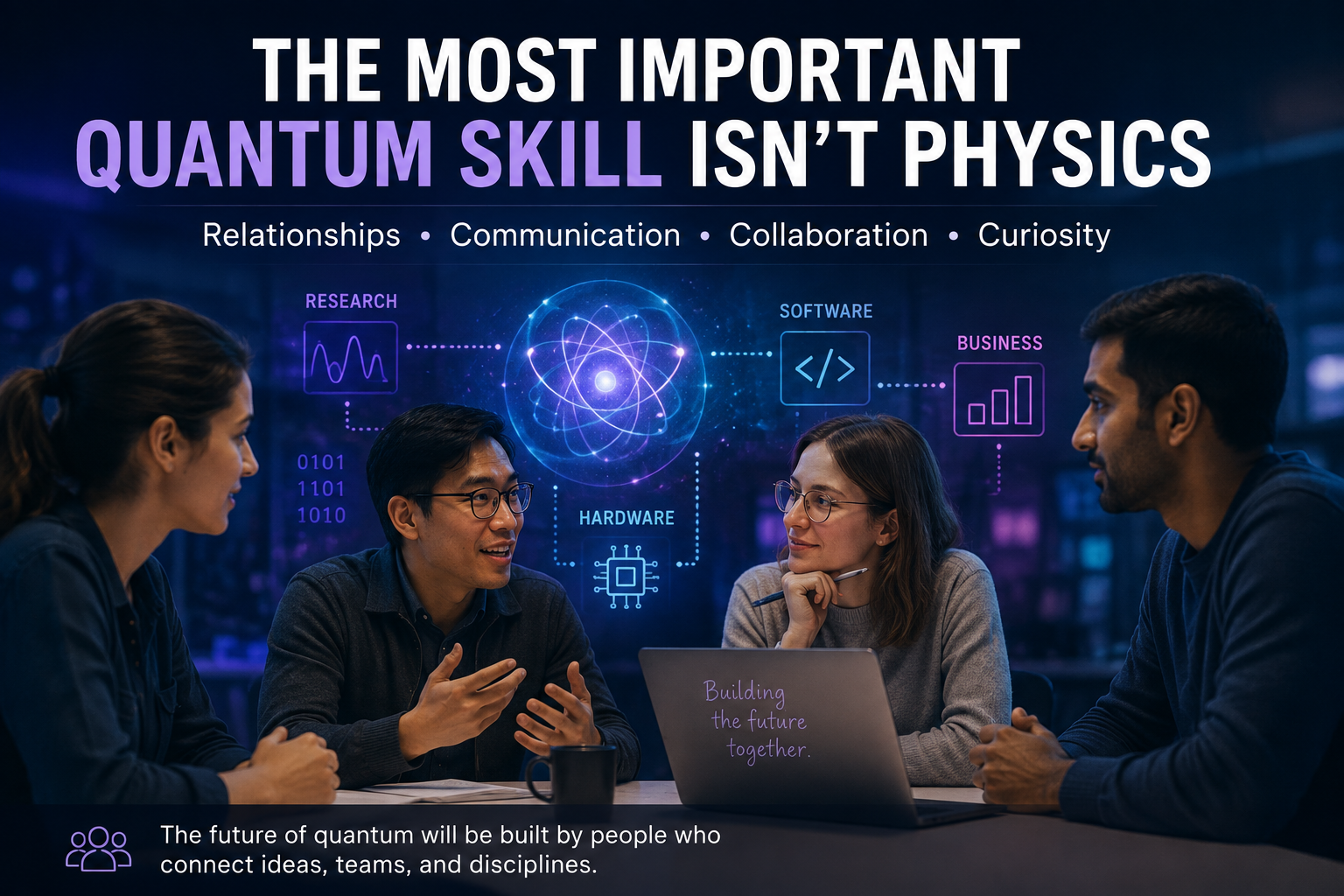
Across boardrooms, innovation labs, developer teams, and government briefings, a quiet realization is taking hold: the quantum ecosystem does not just need more technical breakthroughs. It needs more people who can translate those breakthroughs into language that organizations can actually act on.
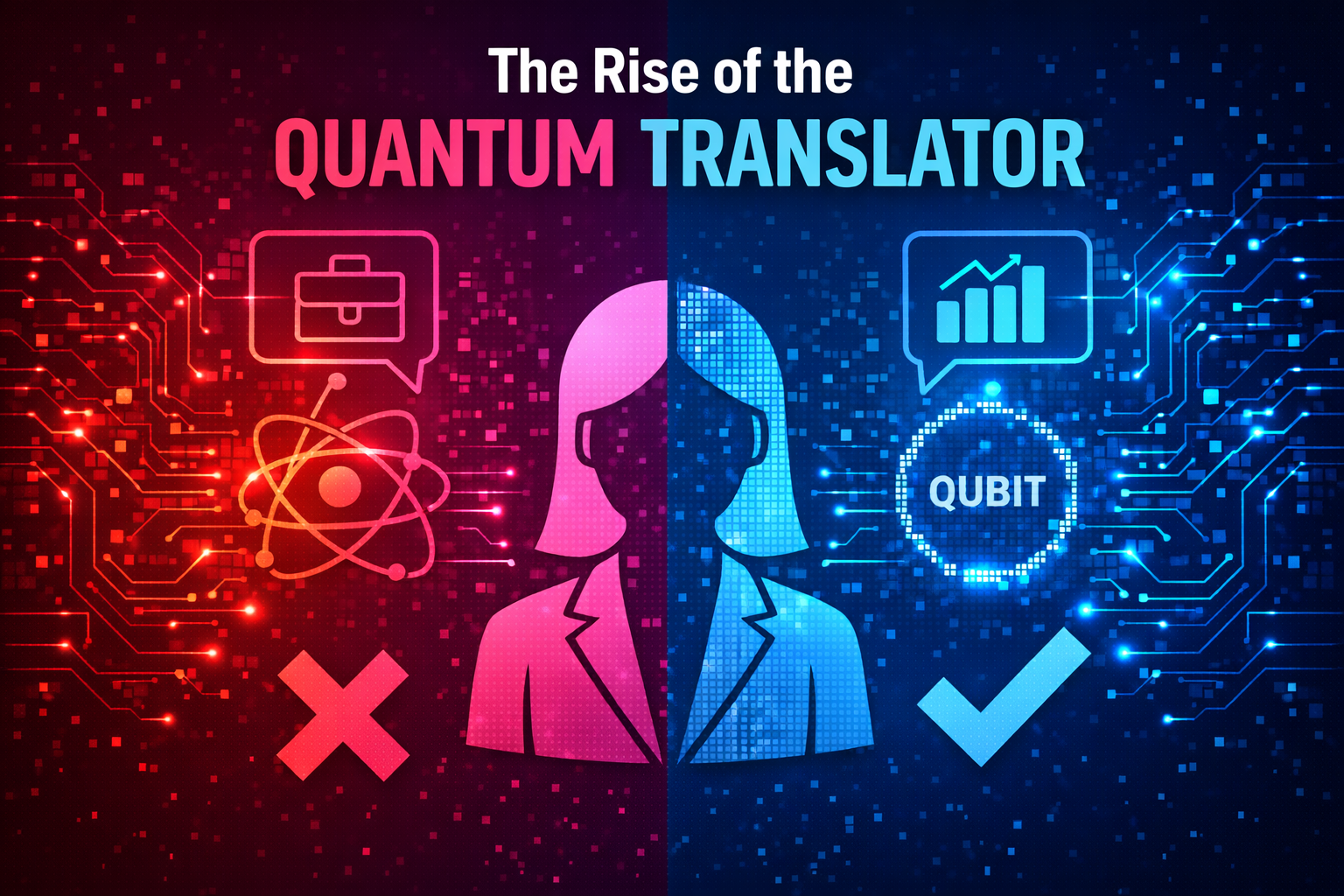
Welcome to the rise of the quantum translator.
The Hidden Friction in Quantum Adoption
Quantum computing is not failing to attract attention. If anything, the opposite is true. Enterprises are watching closely. Governments are funding aggressively. Universities are expanding programs. Venture capital continues to flow into the space.
Yet when you speak privately with enterprise leaders, a consistent pattern emerges. Interest is high. Understanding is uneven. Action is cautious.
Why?
Because quantum sits at a uniquely difficult intersection. It is simultaneously:
- Deep physics
- Advanced mathematics
- Specialized hardware
- Emerging software tooling
- Long-horizon commercial strategy
Most organizations are not structured to absorb something that crosses this many domains at once.
Inside many companies today, conversations about quantum often stall in familiar ways:
- Technical teams go very deep, very fast
- Executive stakeholders lose the thread
- Business units struggle to map relevance
- Security teams focus narrowly on risk
- Innovation groups struggle to prioritize pilots
No single group is wrong. They are simply speaking different dialects of the same emerging language.
This is where the quantum translator becomes critical.
What Is a Quantum Translator, Really?
Despite the name, this role is not about simplifying quantum into something inaccurate. In fact, the best translators do the opposite. They preserve technical integrity while making the implications legible to different audiences.
A true quantum translator typically operates at the intersection of several capabilities:
- Enough technical fluency to understand core concepts
- Enough business context to map real-world impact
- Enough communication skill to bridge stakeholder gaps
- Enough strategic awareness to separate hype from signal
Think of this role less as a “simplifier” and more as a contextualizer.
Inside an enterprise setting, this person might:
- Help executives understand realistic timelines
- Translate hardware announcements into business relevance
- Guide security teams through post-quantum implications
- Support developers exploring quantum tooling
- Frame pilot opportunities for innovation teams
In many ways, this is the connective tissue the ecosystem has been missing.
Why This Role Is Emerging Now
Every deep technology wave eventually hits the same inflection point. Early progress is driven by specialists. But as the field approaches broader adoption, the constraint shifts from pure invention to organizational absorption.
Quantum is entering that phase.
Several forces are accelerating the need for translators:
1. Enterprise curiosity is rising faster than enterprise literacy
Many organizations now have quantum on their radar. Far fewer have internal teams that truly understand how to evaluate it. This creates a widening interpretation gap.
2. Messaging in the market is uneven
Quantum headlines often oscillate between over-optimism and deep technical opacity. Decision-makers are hungry for grounded, contextual explanations they can trust.
3. The use-case landscape is highly domain-specific
Quantum value is not one-size-fits-all. What matters for pharmaceuticals differs from finance, which differs from energy, which differs from logistics. Translation requires industry fluency, not just technical knowledge.
4. Workforce pathways into quantum are diversifying
The field is no longer composed solely of quantum physicists. Developers, security experts, product leaders, and strategists are all entering the ecosystem. They need navigational guidance.
Together, these forces are creating a quiet but significant talent opportunity.
The Career Opportunity Many Are Missing
One of the most persistent misconceptions in the quantum space is the belief that meaningful participation requires a PhD in quantum physics.
Physics expertise will always be foundational. But the ecosystem that is forming around quantum is much broader than many assume.
Organizations increasingly need professionals who can:
- Interpret technical roadmaps
- Evaluate vendor claims
- Guide internal education
- Shape responsible messaging
- Build ecosystem partnerships
- Support executive decision-making
In other words, they need translators.
For professionals coming from backgrounds such as:
- Developer relations
- Technical marketing
- Product strategy
- Enterprise architecture
- Cybersecurity
- Data science
- Innovation leadership
…the barrier to meaningful contribution may be lower than they think.
The key is not becoming a physicist overnight. The key is building enough quantum literacy to bridge worlds.
What Makes an Effective Quantum Translator
Not everyone who communicates about quantum becomes a trusted voice. The most effective translators tend to share several traits.
Intellectual humility.
They respect the complexity of the field and avoid oversimplification that distorts reality.
Cross-domain curiosity.
They are comfortable learning across physics, software, and business contexts.
Precision in language.
They understand that small wording changes in quantum discussions can materially alter meaning.
Audience sensitivity.
They tailor explanations based on whether they are speaking to developers, executives, regulators, or students.
Long-horizon thinking.
They recognize that quantum adoption will unfold unevenly over time.
These capabilities are rare. And increasingly valuable.
Why the Ecosystem Needs This Role Urgently
If the quantum industry wants to scale responsibly, the communication layer must mature alongside the hardware and software layers.
Without strong translators:
- Hype cycles become more volatile
- Enterprise adoption slows
- Talent pipelines narrow unnecessarily
- Investment signals become noisier
- Strategic planning becomes misaligned
With strong translators, the opposite happens. Organizations move with more confidence. Expectations become more realistic. Collaboration across disciplines improves.
In many ways, the quantum translator is not just a helpful role. It is an enabling role.
The Bottom Line
Quantum computing’s future will absolutely be shaped by physicists and engineers pushing the boundaries of what machines can do.
But the speed and quality of real-world adoption will increasingly depend on something less visible and arguably just as important:
People who can make sense of it all.
The rise of the quantum translator is not a side story in the evolution of this field. It is a signal that the ecosystem is maturing beyond pure research into the far more complex world of organizational change.
And for those watching closely, it may also be one of the most compelling career opportunities in deep tech today.
Where do you see the biggest translation gap in quantum right now—technical, business, or educational?