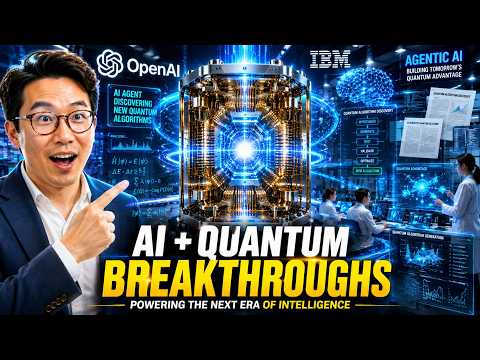
Picture a moment at dawn, when the world holds its breath in the crossfade between night and day. This is where we find ourselves with the nascent convergence of quantum computing and artificial intelligence: poised on the brink of extraordinary transformation.
Quantum computing isn’t just another leap in processing power; it is a paradigm shift, a reframing of how we understand computation altogether. At its core, quantum computing leverages the enigmatic principles of quantum mechanics, where particles exist in superpositions of states, allowing computations to run across many possible states simultaneously. This is a world where the binary absolutes of 0s and 1s give way to a spectrum of possibilities—enabling computations at speeds and scales unimaginable with classical computers.
Based on content from The IoT Academy
To begin unraveling this, consider the notion of a qubit. Unlike the traditional bits in a classical computer, qubits encompass a dual existence, embodying both 0 and 1 until measured. It’s a subtle, almost poetic complexity, reflecting the nuanced unpredictability of the world. Harnessing this power, albeit challenging, opens up avenues for addressing computational problems that remain intractable to current technology.
Now, let us turn our gaze toward artificial intelligence, an area already thriving on the substrates of big data and sophisticated algorithms. In many ways, AI and machine learning thrive on meticulous pattern recognition and data processing, fields ripe for revolutionizing with quantum aid.
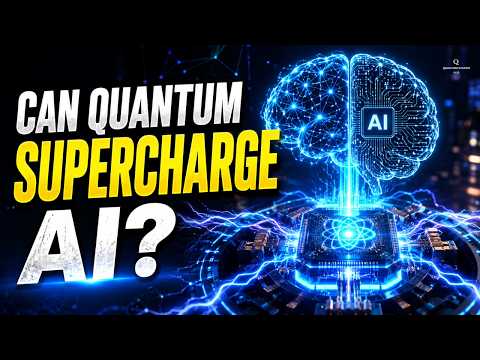
At the intersection of these two fields lies Quantum Machine Learning (QML), a hybrid approach blending quantum computing’s prodigious processing capabilities with machine learning’s data-hungry algorithms. The idea isn’t merely to replace classical models with quantum alternatives but to synergize their strengths. For instance, quantum algorithms can accelerate tasks such as solving linear algebra problems, which form the backbone of many machine learning processes.
It’s a symbiotic relationship. Quantum computers can tackle complex datasets much more efficiently, potentially leading to breakthroughs in AI applications ranging from drug discovery, with its labyrinthine molecular interactions, to optimization problems faced in logistics and finance.
Consider the concept of hybrid classical-quantum models, where computations are shared between classical and quantum processors. In such scenarios, quantum processors handle the heavy-lifting portions of the computation, while classical systems manage the auxiliary tasks. This balance allows current AI frameworks to incrementally evolve, incorporating quantum efficiencies into existing structures. It’s like enhancing a beautiful orchestral symphony with a few powerful new instruments that amplify its harmony.
To those who might be skeptical, pondering the practicality of such integration amidst nascent technology, it is crucial to acknowledge the hurdles. Quantum systems are delicate constructs, highly susceptible to environmental factors and errors, still striving for maturity. Quantum decoherence—the challenge of retaining quantum states long enough for effective computation—remains a persistent obstacle. However, innovation takes root amidst such challenges, propelling the scientific community toward breakthroughs that inch closer toward a reliable quantum future.
As these worlds intertwine, a question dances on the horizon: How will we, as custodians of this potential, responsibly harness it? The future is an open book, pages yet unwritten but teeming with potential narratives. Will we solve problems we don’t yet know exist? Address humanity’s grand challenges—from climate change to healthcare—through lenses we haven’t yet dared to imagine?
In closing, as we navigate this dawn of quantum-AI integration, we find ourselves not just as observers but as participants in crafting a world where the impossible becomes merely an unexplored possibility. The road is long, but it is precisely in the space of uncertainty where magic, it seems, resides.
What awaits beyond this quantum horizon? Join the conversation and imagine the unwritten stories of our tomorrow.
—