Everyone seems enraptured by the whirl and whir of robots sculpting their kind in European factories, as humanoid figures pick up pace in media narratives. Yet, in this mechanical ballet, there’s a rhythm that whispers louder within the computational corridors of the mind—a deviation from the current dance. My prediction feels like an imprint on tomorrow’s landscape, that by the year 2029 or 2030, the leviathan AI data centers that delineate our current reality will start to appear obsolete.
Based on content from Mike Martins
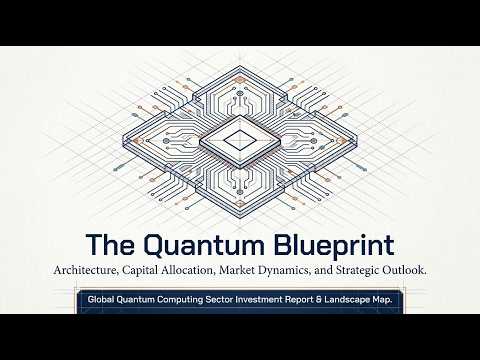
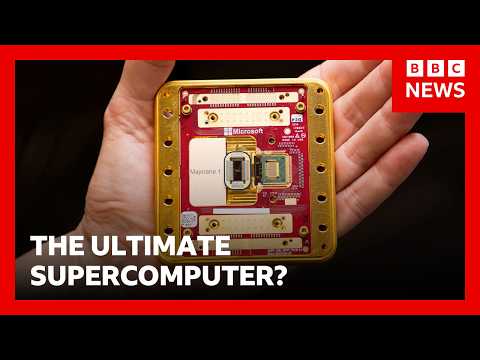
This proclamation isn’t anchored to the iron and wires of humanoid robotics but drifts toward a more intricate, ethereal frontier: quantum computing. The room-filling giants of early computers have shrunken dramatically, and this historical contraction seems poised for a new chapter. Quantum computing embodies this potential—layered with complexities that resist quick understanding yet beckon us with promises of both diminutive scale and monumental capability.
Conventional computing infrastructure, those immense bastions of AI and data, now feels like it may stand on the precipice of profound transformation. A quantum leap, not merely on paper or imagination’s whim, but in tangible scientific potential. The gravity and possibility of quantum computing inject a sense of urgency into this evolution, propelling it to emerge as a ‘new space race.’ But unlike the voyages of yesteryear aimed at the cosmos, this race veers inward—into the particle, into the very essence of computation.
Yet, as I carve out this slender thread of prediction, I remain conscious of the formidable challenges inherent in the realm of quantum mechanics. Today’s quantum computers solve niche problems, their application not yet broad enough to overshadow the current digital monoliths. But in this territory marked with uncertainty, there lies its charm: the challenge of broken superpositions, errors awaiting correction, qubits dancing in disciplined, elusive choreography.
Consider the stakes: the projected breakthroughs of 2028 to 2030, the awareness among governments that technological prowess extends far beyond consumer gadgetry. It speaks to national security, cryptography, military advancements—entwined with the very sinews of economic and technological dominance. The essence and allure of quantum computing lie in these possibilities—of science reimagined, of AI reborn, not as we know it, but reshaped through fractals of quantum reality.
As we hover at the edge of this potent horizon, it might be asked: Could the investment into AI and its colossal data bastions serve as a footnote in history’s grand ledger—a prelude to something profoundly transformative? The work involved in teleporting the promise of quantum computing across the threshold of practicality demands attention, innovation, and perhaps a certain delicacy of balance as governments—the United States chief among them—leverage funding and mobilize intellectual capital for quantum’s frontier. Deals, like the recent $100 million agreement between D-Wave Quantum and the US Department of Commerce, align as harbingers for this reorienting race.
In this narrative’s undercurrent, we acknowledge that robots building robots play a part in our collective ambition, yet our gaze shifts to the dizzying potential of qubits and their dance—a symphony of probability. The question arises: In the symphony of technology, are AI data centers the reigning maestri, or is the baton already passing to quantum’s unseen hand?
The provocations of this prediction do more than question current realities; they urge us to reconcile with them. What we really find as we peer toward 2030 is not a foregone conclusion but a rich spectrum of inquiry—prompting us to consider how we might respond, innovate, and adapt. Will our future smile in recognition at quantum’s touch, or will we reconsider the letters of our technological destiny once more?
It seems fitting to archive this musing—a time-bend past the unofficial borders of our present. I invite you to join in this quiet race of anticipation. You, dear reader, are now part of this dialogue. Come 2030, how will we stand together, you and I, facing the march of time, quantum, and beyond?
—