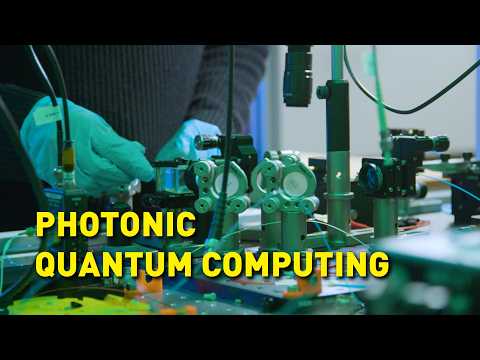
In the quiet corridors where light bends at quantum levels and decisions ripple across computation, something extraordinary is happening. Quandela—a name that has begun to resonate in the pulsating fields of quantum computing—is crafting a pathway to make photonic quantum computing a functional reality today, not just a promise for the future.
Based on content from Quandela
The journey of quantum computing often feels like navigating through an undefined space, where the potential is vast yet veiled with complexities. Far beyond laboratory confines, Quandela is stepping into that space with tangible advancements. By focusing on photons—the fundamental carriers of quantum information—the team at Quandela has unlocked a method to generate single and entangled photons on demand, setting the stage for scalable, manageable quantum systems.
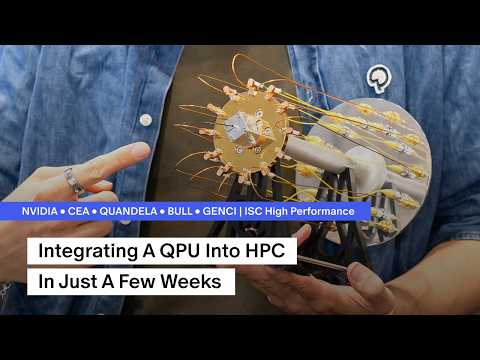
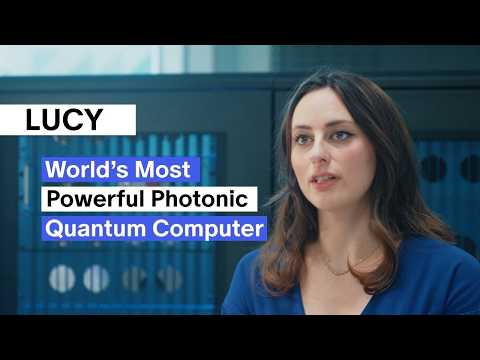
Imagine, if you will, a photonic quantum computer effortlessly integrating next to the robust infrastructure of high-performance computing environments. Here lies Lucy, named yet fully realized by 2025 at CEA’s TGCC supercomputing centre. This isn’t just an ambitious prototype; it’s a working entity, a photonic quantum computer that embodies Quandela’s vision of delivering utility in the here and now, while paving the road to more fault-tolerant, larger systems.
Each decision made at Quandela is not by chance but by an acute understanding of the subtleties within quantum mechanics, especially around reducing infrastructural strains. Efficient, energy-conscious quantum systems emerging from their efforts are designed to sit seamlessly alongside existing datacenter networks. The team’s philosophy defies the wait-and-see approach that can stall technological innovation. This dynamic approach—building with today’s possibilities and constraints—may well change how we perceive readiness in quantum computing.
What sets Quandela apart is the noise surrounding its achievements—their systems aren’t merely static creations but vital, deployable solutions. Photonic integrated circuits born from their labs have already delivered quantum photonic processors reaching an industrial-grade benchmark of 12 qubits. This transition from conceptual to operational highlights a rare blend of innovation and pragmatism.
Applications of Quandela’s quantum systems are already varied and impactful. From reimagining timetabling algorithms in train systems alongside the SNSF, to enhancing artificial intelligence with quantum efficiency, Quandela is not just adapting existing computation but transforming industries. Such endeavors symbolize a bridge from academic curiosity to commercial viability, setting a new precedent for collaboration between research and industry.
Access to Quandela’s advancements isn’t reserved for a select few—it’s democratized. Their Cloud platform, bustling with over 2,000 users from academic and industrial backgrounds, exemplifies this ethos, echoing their commitment to shared knowledge. It is a place where bright minds converge to explore, experiment, and expand what quantum computing can achieve. It’s not merely access; it’s empowerment—a toolkit comprising e-learning resources, tutorials, and an open-source software suite designed to demystify quantum technology.
As we peer into the horizon of quantum potential, Quandela poses a significant question wrapped within its ambition: In the race to harness quantum power, why wait for perfect when progress serves us today? This mindset demands reflection, both for those who design technology and those poised to use it.
With an eye toward the future, Quandela continues their push beyond borders, blending research vigor with commercial acumen. Their endeavors are not just aspirations; they are stepping stones toward a universe where quantum computing is as pervasive as it is powerful. In each luminous photon lies a quiet promise, a future waiting to unfold, one calculable shift at a time.
—