In the hushed corridors of strategic decision-making, where today’s choices may resonate for decades, quantum technology is rapidly emerging as a formidable player. As governments, militaries, and policymakers worldwide grapple with the transformative potential of quantum advancements, Dr. Mauritz Kop, the founder of the Stanford Center for Responsible Quantum Technology, explores this critical intersection of innovation and national security.
Based on content from The Prode
In the hushed corridors of strategic decision-making, where today’s choices may resonate for decades, quantum technology is rapidly emerging as a formidable player. As governments, militaries, and policymakers worldwide grapple with the transformative potential of quantum advancements, Dr. Mauritz Kop, the founder of the Stanford Center for Responsible Quantum Technology, delves into this critical intersection of innovation and national security.
In a recent conversation on The Prode’s episode, Kop explores, with succinct clarity yet profound depth, how quantum computing is not merely a technological curiosity but a pivotal axis around which questions of cybersecurity, military communications, encryption, and global competitive dynamics now pivot.
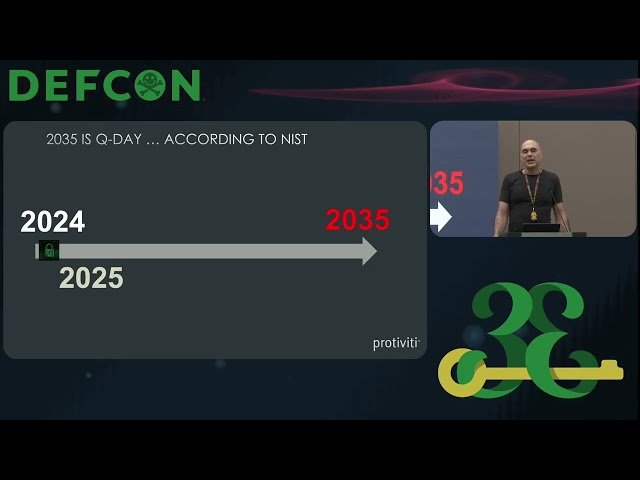
Today’s quantum computers are not yet capable of breaking widely used encryption methods such as RSA or elliptic curve cryptography at practical scales. However, the landscape is shifting. This evolutionary process is not about a singular event, a ‘Q-Day,’ but rather an unfolding series of advancements reshaping our approach to cryptography and security preparedness. Time becomes a crucial yet elusive factor, as the interval between current vulnerabilities and future quantum capabilities narrows unpredictably.
Governmental bodies across the globe, recognizing this indeterminate horizon, have begun setting tangible plans in motion. In the United States, for instance, the National Institute of Standards and Technology (NIST) finalized its first lineup of post-quantum standards in 2024. The National Security Agency (NSA), too, outlines clear milestones, requiring new national security system acquisitions to adopt quantum-resistant standards by January 2027, with a transition aimed for completion by 2035.
The implications of quantum technology extend beyond cryptography, reaching into the realm of quantum sensing and its potential to alter the landscape of military deterrence. While public discourse occasionally veers into hyperbolic predictions—such as the imminent transparency of oceans to sonar-detecting submarines—Kop urges a more grounded perspective. Better sensors might augment detection systems, but strategic stability rests on reconciling operational reliability with scientific possibility.
Yet amidst the technical discourse, the conversation inevitably returns to the human element, both a strength and a vulnerability. Kop emphasizes the need for anticipatory data stewardship—a forward-thinking mandate incorporating future decryption threats within today’s governance frameworks. This approach acknowledges that the stakes are not solely technological but inherently tied to ethical and strategic foresight.
As the United States, United Kingdom, European Union, and other key players navigate this terrain, the dynamics of technological and geopolitical power are set against an intricate backdrop. China’s ability to cultivate and deploy scientific talent on a massive scale adds another layer of complexity, underscoring how national imperatives intertwine with global interdependencies.
Ultimately, the race does not pause for comfort or complacency. As Dr. Kop reflects, “No nation can do it alone.” Collective action, shared standards, and resilient alliances form the bedrock of navigating this quantum frontier. As policymakers, researchers, and citizens alike engage in the quiet revolution of quantum technology, perhaps the most pivotal questions remain those we have yet to fully unveil, guiding us into a future defined less by the shocks of surprise and more by our capacity to anticipate and adapt.
For those wishing to explore further, Dr. Kop’s detailed essay with Joe Federici, available at War on the Rocks, offers expansive insights into how the race to quantum preeminence unfolds amidst the shifting modes of global power. In the convergence of quantum and artificial intelligence, the strategic landscape is being irreversibly altered, positioning us at the brink of a quantum-driven epoch.
This dialogue is not just a precursory glimpse but an invitation to a deeper understanding of how quantum technology is reshaping the very notion of security, urging us toward a future that we construct not merely with technology but with thoughtful intention and preparedness.
—