Imagine you’re at a wedding, sitting next to someone you’ve never met. Somewhere between dinner and the speeches, you start talking.
“What do you do?”
“I’m a physicist. I work on quantum computers.”
Now, that’s a conversation I’d want to have.
But what happens when you ask how those computers actually work? That’s where things can get complicated, especially when someone starts talking about trapping individual electrons to store and process quantum information.
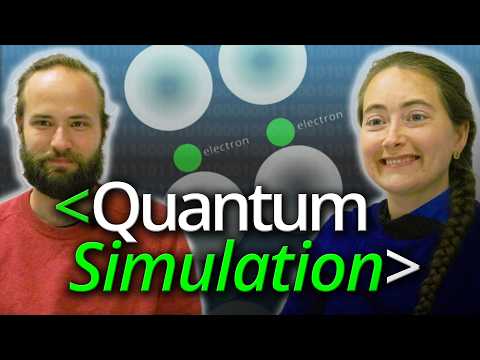
Johannes Pollanen of EeroQ works on this very challenge. The company is developing a different approach to quantum computing, using electrons trapped above the surface of liquid helium as qubits.
What interests me about this technology is that it uses something familiar, electrons, in an environment most of us would never think to imagine.
Quantum computing is becoming a more familiar topic, particularly with growing investment and announcements from companies like Google, IBM, and Microsoft. But recognizing the term and understanding the science behind it are two very different things.
And that’s what makes conversations with researchers like Pollanen so interesting. They give us a chance to get beyond the headlines and understand what scientists are actually building, why they’ve chosen a particular approach, and what still needs to happen before these machines become useful.
Based on content from Thinking On Paper
At the heart of EeroQ’s approach lies a rather poetic image—single electrons floating on a whisper-thin layer of superfluid helium, some 10 nanometers above the surface of chips crafted in commercial semiconductor foundries. Why helium, you might ask? Pollanen refers to it as “the cleanest system” for electron qubits, an environment free from the noise and imperfections that plague other systems. Helium’s remarkable resistance to freezing even at minuscule temperatures plays a crucial role, creating a stable, nearly perfect surface upon which electrons can perform their quantum ballet.
This dance of electrons on helium becomes the foundation of a new generation of quantum computers. The methodology—capturing the quantum property of spin in electrons that hover delicately above a thin layer of superfluid—is as revolutionary as it is intricate. Not unlike the transition from vacuum tubes to transistors in classical computing, this endeavor seeks to be a significant leap toward more efficient and powerful quantum machines.
However, the path to making these dream machines a practical reality is not without challenges. Pollanen emphasizes the importance of balancing the quality and quantity of qubits. This perpetual tug-of-war is emblematic of the broader challenges facing the field: no single modality is perfect, and each comes with its own set of technological hurdles. The race is to find the transistors of quantum computing—the scalable, reliable building blocks for future computers.
Even as EeroQ pioneers its approach, others in the field explore different roads—superconducting circuits, trapped ions, and photons, to name a few, with each method bringing unique advantages and hurdles. It’s a testament to the vibrant, competitive landscape of quantum computing that this variety exists; a frontier where collaboration and innovation dance together in a rhythm yet to be established.
So, why does any of this matter to us, to our everyday lives filled with complexities far removed from Helium and electrons? The promise of quantum computing is not just about raw computational power. It’s about the ability to simulate molecules and unravel the code of nature with a precision previously thought impossible. Such advancements hold hopes for breakthrough discoveries in drug development, optimization in materials science, and advancements across fields that hinge on understanding complexity beyond current means.
For Johannes Pollanen and his team, this isn’t merely about technological triumph. It’s a personal journey that bridges the abstract allure of quantum mechanics with tangible benefits to humanity. As physicists and engineers transform what once seemed impossible into realities within chip architectures and supercooled environments, they are not just building computers; they are reshaping the possibilities of what we, as a species, can achieve.
In this reflection on what lies ahead, we are reminded of the quantum lessons offered by nature—identical particles moving in concert, revealing truths not visible in isolation. It’s a compelling narrative of how technology, driven by both ambition and humility, seeks to harmonize complexity into clarity, much like a universe of electrons guided expertly across the shimmering surface of Helium.
Perhaps the next time you’re seated next to a stranger at a wedding, or on a bus, or in line at a café, quantum computing might just enter into conversation. And when it does, you’ll know there’s more than meets the eye—an exquisite dance of electrons entangled in our world, ever-transforming, ever-inspiring.
—