Picture a chess game that began a decade ago, where each move pushes boundaries on a board as vast as our collective imagination. As we stand in 2026, reflecting on the evolution of quantum computing feels akin to contemplating the intricate patterns etched into an ancient tapestry—at once complex and full of promise, each thread representing years of breakthrough and learning.
The past year has marked significant strides forward. IBM, in collaboration with the U.S. Department of Commerce, announced the creation of a quantum wafer foundry, a move signaled by a commitment exceeding ten billion dollars aimed at advancing towards fault-tolerant quantum computers. This isn’t merely a bold financial gesture; it’s a living testament to the belief that quantum computing is fast approaching the dawn of practical application.
Based on content from ExplainingComputers
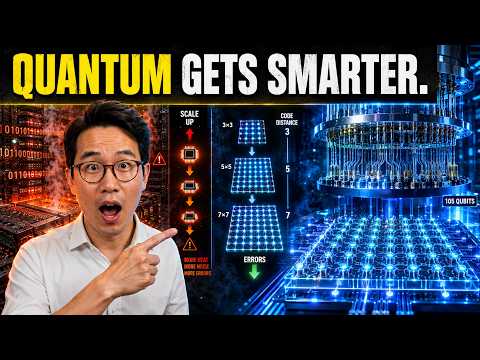
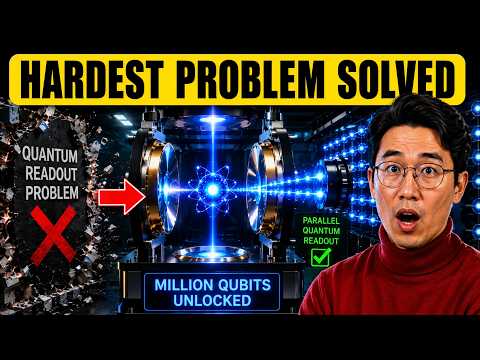
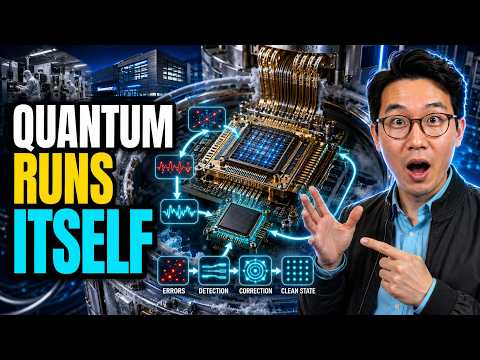
Historically, the community’s focus hung on the challenge of increasing qubit count in processors, leading to the era of noisy intermediate-scale quantum (NISQ) technology. Yet, understanding the fragility of physical qubits turned research toward quantum error correction. Emphasis shifted toward logical qubits, which offer resilient performance in the face of errors—a critical step towards reliable fault-tolerant quantum computing (FTQC).
In December 2024, Google introduced Willow, a quantum processor distinguished by its ability to enhance logical qubits exponentially as additional physical qubits are employed. This incremental yet revolutionary step suggested that scalable quantum systems could soon evolve from dream to reality. IBM’s roadmap follows a similar compass, aiming to introduce a Starling processor by 2029 that comprises 200 logical qubits, testament to their track record of overcoming challenges with persistence and ingenuity.
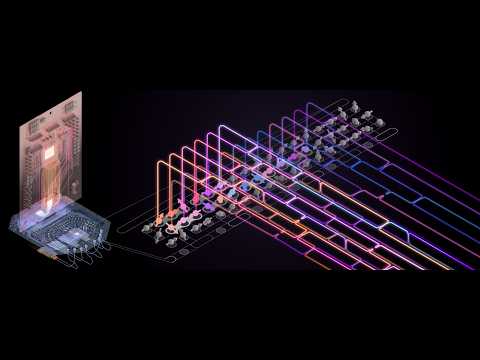
Interestingly, the modalities—or styles of qubits—are evolving too. Superconducting qubits, traditional in their reliance on paired metal strips, maintain innovation’s spotlight. Meanwhile, alternative qubit technologies, from silicon spin qubits to the luminous pathways of photonic qubits, illuminate diverse paths toward the same destination. PsiQuantum and Xanadu’s ventures with photonic architectures, Atom Computing’s progress with neutral atom systems, and advances in topological qubit systems by Microsoft all weave into a broader narrative pushing toward mainstream adoption by the next decade.
And then there’s quantum cloud services—an area replete with both established giants and fresh entrants. Cloud availability democratizes access to quantum computing, turning a select privilege into an accessible frontier of research. Providers like Amazon and Microsoft are already transcending conventional service boundaries, acting as brokers and expanding the ecosystem. The dawn of quantum as a service (QaaS) forecasts a near future where quantum resources are omnipresent, at once extending the studio space for innovation and accelerating the journey to maturity.
Yet with progress comes caution. Google’s recent revelations about cryptographic vulnerabilities practically begs contemplation. The reality that fewer resources are needed to dismantle current encryption standards should prompt immediate attention to post-quantum cryptography (PQC) and its swift adoption.
Looking forward, the application canvas stretches wide. Quantum computing’s role is pivotal in fields like molecular and materials science, sectors set to redefine industries ranging from healthcare to energy. Its potential to disrupt and enhance, from simulating nature at atomic scales to optimizing complex systems beyond today’s computation, is both exhilarating and humbling.
As we reminisce over the past decade’s advancements, each innovation feels like an echo of Richard Feynman’s 1981 vision of a true quantum simulation. Might we now ask: How do we prepare industries, policies, and society for a quantum reality? Will we fully grasp the change as it unfolds, or merely wonder at the speed of its passing?
The decade ahead will likely bear answers. Some will look back and see this as preparation, others as revelation. In either case, the quantum landscape will continue to shift, its patterns more intricate with each year that passes.
—