What if we could use computers to discover new medicines or design materials with properties we haven’t been able to create before? These are some of the possibilities researchers are exploring with quantum computing.
But how does a quantum computer actually work, and what makes it so different from the computers we use every day?
To understand that, we need to start with something familiar.
The smartphone in your pocket and the laptop on your desk both rely on classical computing. They process information using bits, which represent either a 0 or a 1. Billions of these bits work together to perform everything from simple calculations to the complex tasks handled by today’s supercomputers.
And while those machines are incredibly powerful, certain problems remain difficult, particularly when scientists try to simulate the behavior of molecules and materials at the quantum level.
That’s where qubits come in.
Unlike classical bits, qubits can exist in what’s called superposition, a combination of the states we describe as 0 and 1. When measured, however, a qubit produces a definite result.
I remember first coming across this idea and trying to picture how something could exist in a combination of two states. It’s not an easy concept to wrap your head around, especially when so much of our everyday experience tells us that things must be one way or another.
But that’s part of what makes quantum computing interesting. Researchers are using the unusual behavior of quantum systems to develop new ways of processing information.
The goal isn’t simply to build faster computers. It’s to find ways to solve certain problems that remain extraordinarily difficult, even for the most powerful machines we have today.
Based on content from TechVision
To truly grasp the majesty of what qubits can achieve, think of them as revolutionizing the way we process information. Where two conventional bits give you one combination at a time, two qubits offer all possibilities at once. And with more qubits, this processing power doesn’t just increase — it explodes exponentially. For example, a system of 50 qubits can represent over one quadrillion computational states at any given instance. But no cosmic magic is at play here; extracting useful results from these states demands precisely crafted algorithms, specially designed for the task.
As we follow this thread deeper into the quantum realm, we encounter concepts like entanglement — what Einstein once evocatively dubbed ‘spooky action at a distance.’ Here, qubits become interconnected. Their states are inexplicably tied together, similar to musicians in a symphony whose notes are indivisible from the music they create. These entangled relationships are pivotal for the computational prowess of quantum computers.
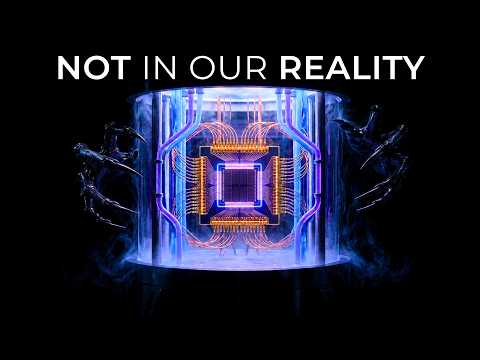
However, the quantum world is mercilessly unforgiving. At temperatures warmer than negative 273.15 degrees Celsius, the fragile quantum states succumb to their surroundings. This is why quantum computers don’t look like your average PC; they are intricate works of engineering, often appearing as if they belong on a sci-fi movie set. Housing these marvels necessitates cutting-edge refrigeration and heat control technologies.
But what captures both the excitement and the anxiety of quantum computing is its application. In the fields of chemistry and material sciences, where traditional computers falter in simulating molecular behavior accurately, quantum computers could perform miracles. Imagine accurately predicting chemical reactions and designing new drugs with unprecedented precision, or engineering energy-efficient materials and industrial processes that are kinder to the planet. Indeed, the potential for quantum computing to save lives and heal the earth is profound.
On the flip side lies a shadowy concern. Could these machines, with their immense power, unravel the very fabric of modern cybersecurity? Current encryption methods rely on complex mathematical puzzles deemed unsolvable by today’s conventional computers. Yet, quantum computers, with their distinct modus operandi, hold the potential to crack these puzzles with concerning ease. Although today’s quantum hardware isn’t yet at the level needed to materialize these fears, the race is on to develop post-quantum cryptography standards, aiming to shield our data from the future threat.
So, why hasn’t this technology permeated everyday life? The answer lies in the Achilles’ heel of quantum computing — decoherence. Qubits are notoriously sensitive to interference, rendering many calculations prone to failure. The scientific community is diligently striving to overcome these hurdles, focusing efforts on developing quantum error correction techniques to shield delicate computations.
In envisioning the future, quantum computers are not poised to overthrow our trusty classical machines. Instead, they will complement them, offering specialization where traditional computing cannot tread. Envision a seamless partnership between classical AI systems and quantum processors, each executing roles for which they are best suited.
As we look toward the horizon, the true fruition of quantum computing will arrive when it solves problems meaningfully impacting life on Earth. When that day comes, our world will begin to transform, subtly and profoundly. Until then, we must remain watchful, expectant, and above all, curious about the marvels still to unfold.
—