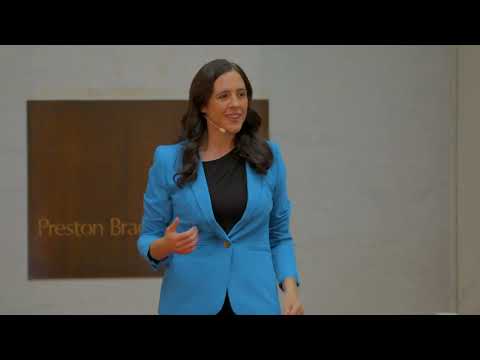
Speaker: David Williams-Young
Quantum computers promise to tackle strongly correlated molecular systems that defeat classical electronic-structure methods, but realizing quantum utility depends on every stage of the pipeline, not just the quantum algorithm. QDK/Chemistry, an open-source package in the Microsoft Quantum Development Kit, treats this entire pipeline as a single, modular Python framework. Immutable data classes and stateless algorithms with fixed interfaces let researchers swap backends without changing application code. This talk introduces QDK/Chemistry’s composable architecture, shows how classical and quantum stages interoperate to minimize quantum resources, and offers design patterns applicable beyond quantum computing.
Based on content from SciPy
Quantum computing sits at the edge of our imagination—an approach to computation that seems to sift through the complexities of certain problems with an elegance unattainable by classical computers. The QDK/Chemistry toolkit represents a crucial navigational instrument in this ethereal landscape, poised at the crossroads of quantum computing and quantum chemistry. Sparked by the relentless drive to confront the limitations of classical methods, QDK/Chemistry offers a composable Python toolkit that harmonizes with the needs of researchers delving into these domains.
The Promise and Complexity of Quantum Chemistry
At the core of quantum chemistry’s allure is its ability to unravel the fierce intricacies of molecular systems that often leave classical methods grasping at straws. However, as David Williams-Young elucidates, delivering on this promise extends beyond crafting compelling quantum algorithms. It involves orchestrating a seamless synergy between classical and quantum processes, treating the entire computational pipeline as a cohesive whole.
QDK/Chemistry, an open-source initiative championed by the Microsoft Quantum Development Kit, embodies this holistic vision. Through immutable data classes and stateless algorithms, it allows researchers to delve into quantum computations with a freedom that’s both liberating and profound. The ability to interchange backends without altering application code is not just a feature; it’s a philosophy of flexibility that recognizes the diverse landscape of computational needs.
Composable Architecture: A Framework for the Community
Everywhere in the quantum chemistry workflow, there are subtle mechanisms at play, intricacies that require meticulous attention. The toolkit’s architecture is intentionally built to be modular, enabling a blend of classical and quantum to minimize resource expenditure. By design, this architecture fosters collaboration and engagement within the broad scientific community, offering a platform where solutions can be as diverse as the contributors themselves.
In the era of hybrid workflows, where the quantum computer acts as an accelerator amidst classical processes, the challenge lies in the orchestration. With each stage of the workflow, from choosing active spaces to solving state preparation problems for Quantum Phase Estimation (QPE), QDK/Chemistry offers tools to fine-tune the system, squeezing problems to fit onto nearer-term quantum machines while maintaining integrity and optimization.
A Unified Approach to Quantum Chemistry
The quantum journey—analogous, in some ways, to a delicate beam-splitter experiment—requires a careful layering of classical and quantum methodologies. Consider the controlled passage of light through a split path; one illumined with context, the other shadowed for analysis. In quantum simulations of chemistry, this analogy finds a delicate reality. The light becomes data, and QDK/Chemistry provides the lenses and mirrors to elucidate the path.
Williams-Young’s insights into scalability—where quantum’s superpolynomial speedup shines—underscore the practical utility that hinges on such unified frameworks. Each component in the toolkit speaks to a broader narrative: a narrative of composition, of weaving individual threads into an optimized tapestry capable of enthralling even the most challenging quantum-chemistry problems.
Setting the Stage for Future Discoveries
QDK/Chemistry is not just a toolkit; it’s an invitation. As researchers continue to explore this frontier, the toolkit stands as a model for how computational frameworks might evolve—domain-agnostic, built for extensibility, and grounded in community collaboration. Each element within QDK/Chemistry whispers of a future where quantum computing not only tackles chemistry’s hardest problems but emerges seamlessly integrated with classical methodology.
In contemplating this vision, we are left with an intriguing question: as quantum computing inexorably defines the next chapter of computational science, how will frameworks like QDK/Chemistry reshape not just our solutions, but our approach to discovery itself?
—