In the fascinating, albeit somewhat esoteric world of quantum computing, one of the most captivating topics that consistently draws attention is “quantum error correction.” This is due to the fragile nature of quantum bits, or qubits, the primary building blocks of any quantum computer. Just like in a symphony orchestra where the harmony can be disrupted by the slightest off-note, the reliability of quantum computations can be compromised by minuscule environmental noise. Imagine trying to perform a delicate surgery but your tools tremble at the faintest whisper – that’s somewhat what working with qubits can feel like.
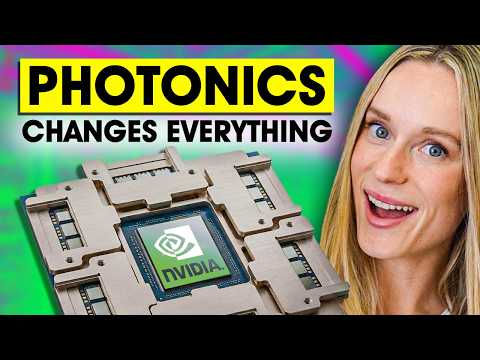
But where there’s complexity, there’s also engineering ingenuity. One of the latest breakthroughs comes from integrating quantum technologies with powerful NVIDIA GPUs through an innovative creation known as the NVQ Link. This technology symbolizes a significant leap in how quantum computers can stabilize and manage the inherent instabilities of qubits. It’s akin to inventing a highly sophisticated shock absorber in our earlier analogy of delicate surgery, enabling steadiness even amid potential disruptions.
This video is from NVIDIA.
Let’s delve deeper and explore the mechanics and implications of this exciting development in quantum computation.
The Fragility of Qubits and the Symphony of Error Correction
Qubits are notoriously sensitive. Current quantum systems can maintain qubit stability for only a few hundred operations, a far cry from the trillions required to solve significant problems. Here’s where quantum error correction comes into play. Measuring a qubit can disturb it and, thus, destroy the information contained within. To counteract this, extra qubits (think of them as backup dancers in a performance, supporting the lead) are entangled and measured to provide enough information to pinpoint where errors might have occurred without affecting the primary qubits.
But executing such a complex dance of information isn’t straightforward. It demands computational capabilities that stretch far beyond what conventional systems can offer.
NVQ Link and CUDAQ: The Bridge and Brains in Quantum Computing
Enter NVQ Link, a groundbreaking interconnect architecture, which marries the robust capabilities of NVIDIA GPUs with the delicate precision required in quantum processing. This system can transfer terabytes of data to and from quantum hardware thousands of times per second—necessary for real-time error correction. Essentially, NVQ Link acts as a high-speed, super-efficient bridge that links the classical and quantum computing realms.
At the heart of this system lies CUDAQ, NVIDIA’s open platform tailored for quantum GPU computing. This tool is not confined merely to error correction. Rather, it expands its prowess to orchestrate an entire array of quantum devices and AI-driven supercomputers, thus paving the way to run sophisticated quantum GPU applications.
The Symbiosis of Classical and Quantum Systems
The quintessential beauty of NVQ Link and CUDAQ technology lies in their ability to blend the powers of classical computing systems with quantum computing platforms. This isn’t about replacing classical systems but enhancing them, integrating both to spawn what could be envisioned as an accelerated quantum supercomputing platform. Imagine combining the brute force of a bulldozer with the meticulous agility of a Swiss watch—this is what the fusion of these computing paradigms aims to achieve.
Implications and The Road Ahead
For researchers and technologists, the implications are profound. Enhanced error correction capabilities mean more stable quantum operations, allowing for more complex and reliable quantum computations. This fusion technology will enable tackling problems that were previously out of reach, like intricate chemical simulations for drug discovery or complex optimization problems in logistics and AI.
In essence, what NVQ Link and CUDAQ represent is a significant step towards the democratization and expansion of quantum computing, making it more accessible and applicable in real-world scenarios. The journey of quantum computing is still in its early stages, but with innovations like these, the path forward is as thrilling as it is promising.