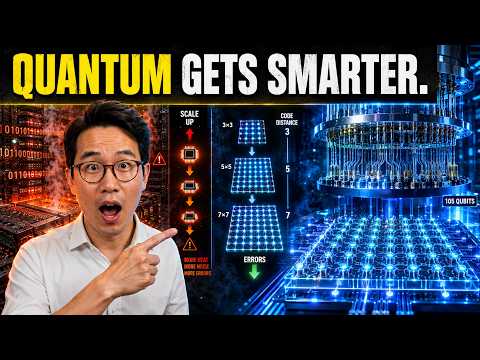
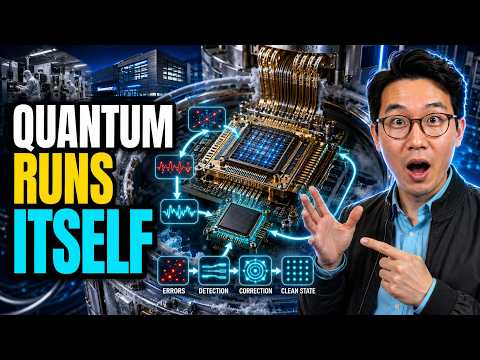
In response, Google Quantum AI has pioneered a breakthrough approach: magic state cultivation. This innovative methodology aims to circumvent the traditional bottlenecks by cultivating pristine magic states from noisy beginnings, thereby reducing the dependence on exhaustive distillation procedures.
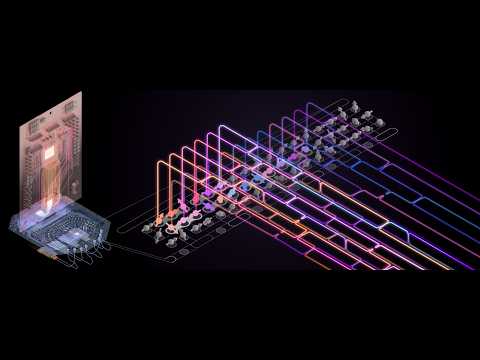
Emma Rosenfeld and her team have put theory into practice on Google’s Willow processor, unraveling the process like a tapestry of quantum potential. The method begins by injecting a low-fidelity, noisy state onto a small logical qubit, followed by multiple rounds of cross-checks where only the most robust states are nurtured and preserved. The resulting states are exemplars of high fidelity and fewer errors, achieving an astounding 40-fold reduction in error rate, with a fidelity soaring to 99.99%.
Based on content from Google Quantum AI
The team also introduced an inventive benchmarking method known as kickback tomography, which uses cultivation itself as a means of validation. This self-referential integrity check ensures that the environment and the tools of cultivation are as fault-tolerant as the states they aspire to create. A pursuit once deemed purely theoretical materializes into a functional technique with profound implications.
Yet, the magic does not halt with cultivation. The transition toward practical applications involves a further stage—aptly named the escape stage. This phase requires adapting the high-fidelity magic state into a larger, more manageable code that can be integrated with existing quantum protocols. Google’s team employed a method called grafting to achieve this transition, supporting the seamless scalability of quantum operations.
Through this intricate dance of algorithmic precision and experimental prowess, magic state cultivation stands not as a solitary achievement but as a bridge between theoretical elegance and experimental reality. This achievement underscores a pivotal moment in quantum computing, promising a future where quantum’s chaotic elegance is harnessed with unprecedented clarity and control.
As we stand on the cusp of quantum transformation, a consideration emerges: how will these advances influence traditional computing paradigms, and where will they lead us in the evolving narrative of technology? With each quantum leap forward, we edge closer to a world where the line between science fiction and science fact fades, inviting us to ponder the unforeseen potentials awaiting on the horizon. How will you prepare for such a future?
—