In an era where information flows faster than rivers after monsoon rains, it’s common to glance only at the surfaces of the headlines. We often graze them like puzzle pieces, scattered and incomplete, never fully forming a picture. Yet, when preparing for something as demanding as the UPSC examinations, understanding the deeper currents beneath the news is vital. Not merely knowing that something is news, but why it’s news and how it fits within a labyrinthine syllabus. Thus, in Episode #002 of ‘Beyond The Headlines,’ we invite you to journey with us through the expansive and intricate landscapes of Artificial Intelligence, Quantum Computing, and Dark Matter.
Based on content from UPSC with Piyush Sinha
Artificial Intelligence: From Generative to Agentic
Artificial Intelligence is often a term thrown around casually, yet its depths are akin to the ocean—vast, largely unexplored, and teeming with potential. Let’s begin at the shores of Generative AI, which is essentially the generation of data that mimics the characteristics of sample data. Think of it like a master impressionist capturing the essence of a voice or style but in its own creative way.
Then, we transition to the domain of Agentic AI, where systems begin to exhibit autonomous decision-making abilities, drawing us into philosophical quandaries of ethics and control. The toolset here includes Neural Networks, complex architectures that allow these machines to learn and operate in environments as diverse as healthcare diagnostics to deep-space missions.
The real crux of AI’s evolution is not just in its capabilities but in how it learns—akin to a multifaceted education system, blending rote, relational, and experiential learning. This journey from Generative to Agentic AI offers us insights, not just into technology but into the trajectories of future human-machine collaborations.
Quantum Computing: Cracking the Classical Code
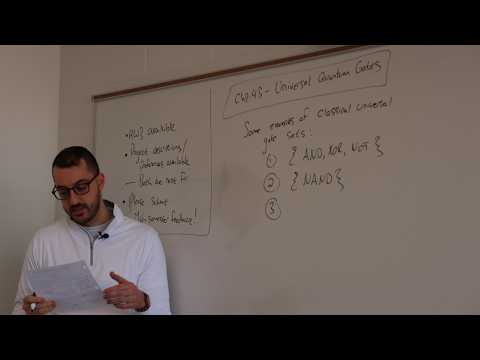
Moving to Quantum Computing, we delve into the subatomic realm, where reality behaves differently—often unpredictably. At the heart of this field are Qubits, which unlike classical binary bits, can exist in a state of superposition, meaning they can be in multiple states at once. Picture a world where certainty is a whisper and possibilities are real and multiplicative.
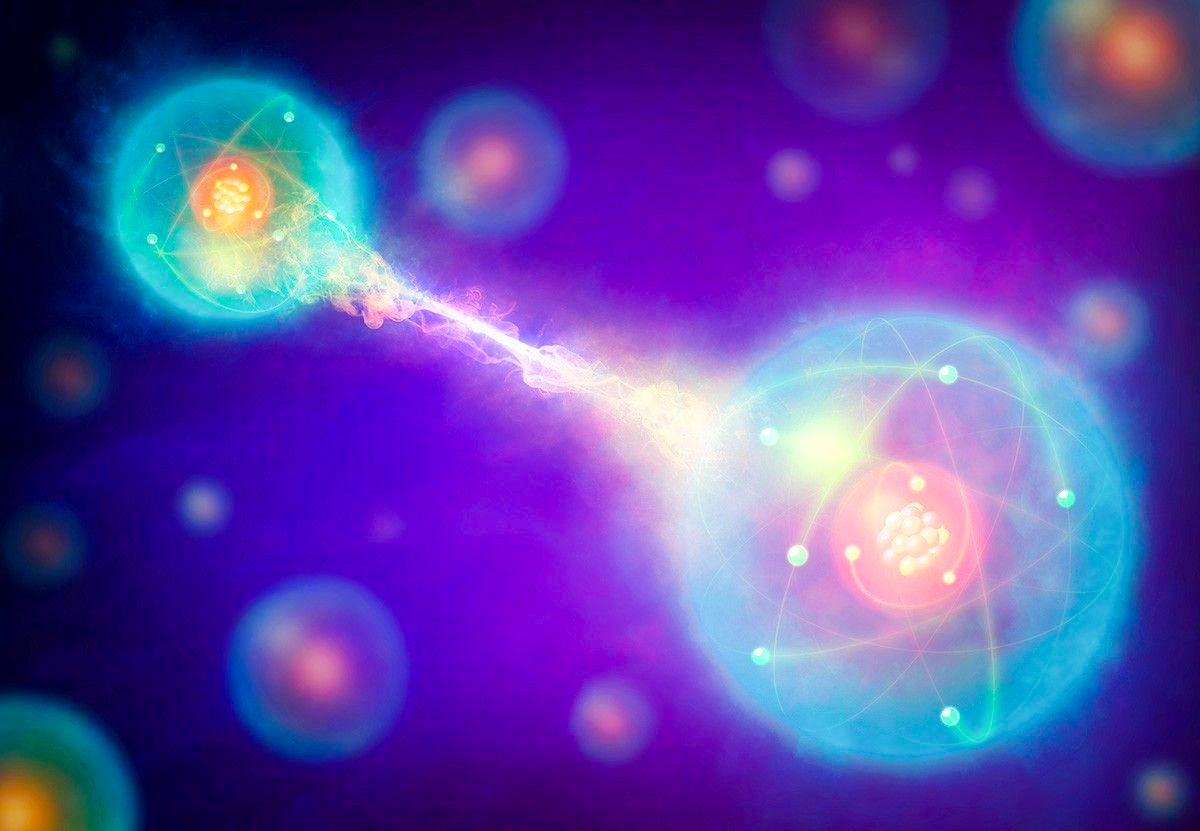
The concepts of Superposition and Quantum Entanglement present abilities far beyond conventional computational power, yet they come with challenges as delicate as a finely balanced scale. Decoherence is perhaps the lurking shadow, the invisible hand that can collapse a quantum state into chaos.
Understanding this realm allows one to appreciate its beauty and complexity. It is within these nuanced layers that quantum computing reveals its place in the global race for technological supremacy.
Dark Matter: The Universe’s Invisible Thread
Lastly, we peer into the celestial mystery of Dark Matter—an enigmatic substance that puzzles even the most intrepid astrophysicists. Though invisible, its gravitational signature is whispered across galaxies, suggesting its hand in shaping cosmic structures.
Float along with concepts like Black Holes and the Event Horizon, where even light’s tenacity succumbs, and Hawking Radiation, a theoretical escape plan for particles from the gravitational prison of black holes. The celestial theater of Supernovae, Neutron Stars, and the rhythmic pulses of Pulsars stretch our understanding of the universe.
In comprehending Dark Matter and related phenomena, we not only approach a higher mastery of astrophysics but also grapple with philosophical questions about existence on a universal scale.
As we emerge from this exploration, threading through concepts that seem to float just beyond our grasp, we realize the critical intersection of these topics with societal advancement and governance—the very essence of why they matter for the UPSC syllabus. It shapes a governance framework prepared for the technological revolutions and cosmic questions on the horizon.
As you digest these insights, consider: how do these realms weigh on the scales of policy-making and global leadership? What roles will future civil servants play in navigating the delicate dance between technology and ethics, certainty and mystery? Such questions define not just exams but the future world.
Beyond The Headlines doesn’t just equip you with information; it invites you to think critically and empathetically, to see the patterns connecting science, governance, and society. Let’s unravel the threads of understanding one headline at a time.
Subscribe for more nuanced explorations and connect the news with the UPSC syllabus; uncover not just the ‘what’s of current affairs, but the ‘whys.’
—